
Agentic AI Course for Non-Technical Professionals: Master Autonomous Workflows

Agentic AI Course for Non-Technical Professionals: Master Autonomous Workflows
An agentic AI course for non-technical professionals teaches operators to design, connect, and supervise autonomous software agents that execute multi-step business goals without writing code.
The era of typing static, single-turn prompts into chat windows is transitioning into the age of autonomous agentic systems. While traditional generative AI acts like an obedient intern waiting for isolated instructions, agentic AI operates like an autonomous project team: evaluating broad objectives, breaking tasks into sequential steps, querying external software tools, and correcting its own errors until the desired business outcome is achieved.
For business managers, marketers, and operations leads, mastering agentic workflows does not require learning Python or configuring Docker containers. Visual orchestration canvases have democratized agent construction. This guide explains what an enterprise-grade agentic AI curriculum covers, how non-coders build reliable autonomous systems, and which skills deliver immediate operational leverage.
Chatbots vs Autonomous Agents: The Structural Shift
Understanding the operational distinction between conversational bots and autonomous agentic workflows is fundamental for non-technical leaders.
+-----------------------------------------------------------------------+
|                    THE AGENTIC EVOLUTION                              |
|                                                                       |
| [Traditional Chatbot]  --> Prompt In  --> Text Out (Passive)          |
|                                                                       |
| [Autonomous Agent]     --> Goal In    --> Task Decomposition          |
|                                       --> Tool Calling (APIs/Search)  |
|                                       --> Self-Reflection & Verify    |
|                                       --> Business Action Taken!      |
+-----------------------------------------------------------------------+
The Limitations of Single-Turn Chatbots
Traditional conversational interfaces require human intervention at every step. If you ask a standard chat model to "find ten high-potential export clients in Gujarat and send them customized introduction proposals," the model generates a fictional list or drafts sample text. It cannot independently browse business registries, verify active corporate email addresses, check your CRM for duplicate records, or schedule real outreach messages.
The Power of Agentic Workflows
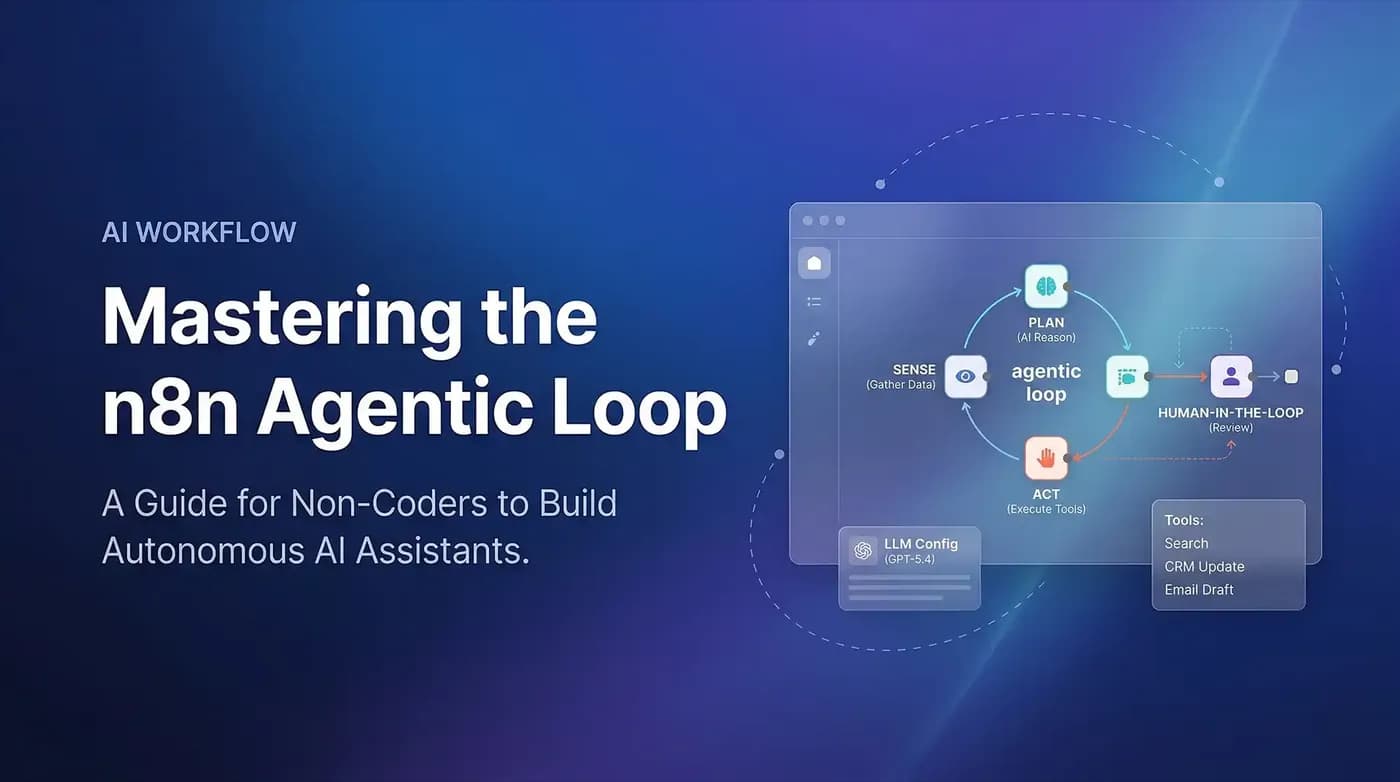
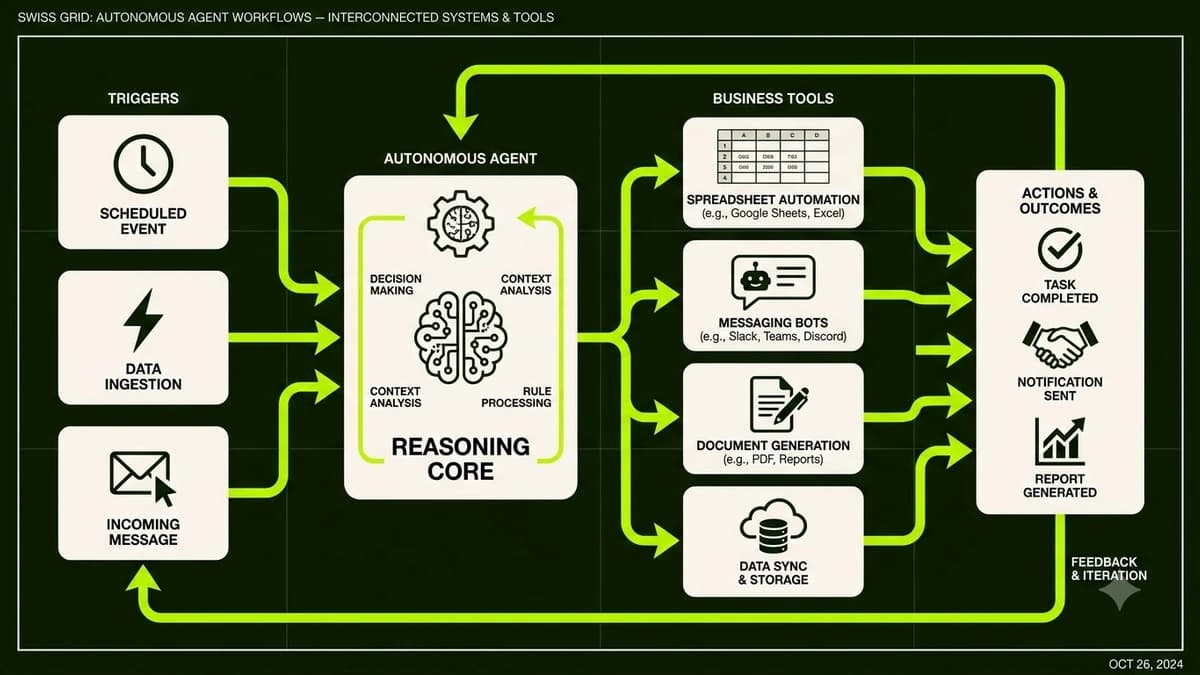
An autonomous agentic system is equipped with tools, memory, and reasoning loops. Given the identical objective, an agentic system executes the following autonomous sequence:
- Queries web search APIs to identify registered manufacturing exporters.
- Extracts verified contact data and checks existing Google Sheets databases.
- Evaluates prospective client pain points against your service catalog.
- Drafts customized proposal drafts into your Gmail draft folder.
- Sends an alert to your mobile device requesting final approval before dispatch.
Core Competencies Taught in a Non-Coder Agentic AI Course
A practical agentic curriculum avoids computer science theory, focusing entirely on systems architecture and operational reliability:
Core Curriculum Module | Real-World Business Skill | Tools Mastered | Practical Deliverable Built |
|---|---|---|---|
1. Agent Decomposition Logic | Breaking ambiguous business goals into deterministic logic steps | Miro, Mermaid Diagrams | Visual process architecture map |
2. Visual Orchestration Engines | Connecting LLM reasoning to real databases and third-party APIs | n8n, Make.com | Live webhook-triggered workflow |
3. Tool Calling & External APIs | Enabling agents to read spreadsheets, search Google, and send emails | Serper API, Gmail API | Automated lead researcher bot |
4. Human-in-the-Loop Safeguards | Implementing verification gates to prevent unauthorized agent actions | Telegram Bot API, Slack | One-click mobile approval buttons |
5. Memory & Context Stores | Preserving customer history across multi-day conversational turns | Supabase, Airtable | Context-aware customer support agent |
Visualizing an Autonomous Business Agent Architecture
Modern non-code agent builders assemble systems using standard modular components:
+-----------------------------------------------------------------------+
|                    MODULAR NO-CODE AGENT STACK                        |
|                                                                       |
|  [Triggers]       --> Webhook / New Email / Scheduled Daily Run       |
|                             |                                         |
|                             v                                         |
|  [Reasoning Core] --> Claude 3.5 Sonnet / GPT-4o Agent Node           |
|                             |                                         |
|                             v                                         |
|  [Toolbox]        --> [Search Web]  [Query Database]  [Format PDF]    |
|                             |                                         |
|                             v                                         |
|  [Safety Gate]    --> Human Telegram Notification ("Approve / Edit")  |
|                             |                                         |
|                             v                                         |
|  [Execution]      --> Push to CRM / Dispatch Email / Update Ledger    |
+-----------------------------------------------------------------------+
The Reasoning Brain
The core of the agent is an advanced reasoning model configured with strict system instructions, defined role boundaries, and clear success criteria.
The Tool Repository
Agents are given access to external utilities. In a visual builder like n8n, each tool is simply a pre-configured node—such as a Google Sheets reader, a WhatsApp Cloud API connector, or a web scraper.
The Verification Loop
Reliable business agents do not hallucinate actions because they incorporate self-reflection checks: after executing an action, the agent validates the result against expected parameters before proceeding to the subsequent step.
4 Practical Business Agents You Can Build in Under 2 Hours
Here are four high-impact autonomous workflows non-programmers routinely deploy across Indian small businesses:
1. The Autonomous Customer Support Triage Agent
- Trigger: Incoming customer support WhatsApp message or email inquiry.
- Agent Action: Identifies order numbers, queries your Shopify or WooCommerce database, retrieves real-time shipping status, and composes an accurate, empathetic response.
- Safety Gate: If customer sentiment is angry or the inquiry involves a refund over ₹2,000, the agent routes the ticket directly to a human manager.
2. The Competitive Pricing & Market Monitor
- Trigger: Daily cron schedule running at 7:00 AM IST.
- Agent Action: Scrapes product catalogue pages across five competitor websites, identifies price changes, summarizes promotional discounts, and generates an executive PDF briefing.
- Output: Delivered directly to the founder's WhatsApp inbox before business hours begin.
3. The Autonomous Invoice & Payment Reconciliation Bot
- Trigger: Incoming bank credit SMS or payment gateway webhook notification.
- Agent Action: Matches payment amounts against pending accounting ledger entries, marks invoices as paid, and dispatches a GST-compliant tax invoice to the customer automatically.
4. The Content Repurposing Pipeline
- Trigger: New long-form YouTube video or podcast published.
- Agent Action: Transcribes the audio, extracts five key actionable frameworks, formats them into a carousel slide deck script, and drafts an accompanying LinkedIn thought leadership article.
How to Choose the Right Agentic AI Training Program
When evaluating courses on agentic AI, look for programs prioritizing architectural autonomy over isolated prompting tricks:
- Emphasis on Visual Canvas Platforms: Ensure the course provides deep, hands-on training with self-hostable tools like n8n or cloud platforms like Make.com.
- Deterministic Reliability Training: Building agents that work 100% of the time requires error handling, fallback models, and output validation schemas. Courses that ignore error handling leave you with fragile toys.
- Real Enterprise Use Cases: Avoid programs that only build toy weather bots or Twitter summary bots. Ensure the curriculum tackles messy, real-world business challenges: reconciling inventory, managing multi-tier customer support, and parsing unstructured invoices.
Learn to build AI workflows that handle your busywork — live sessions, real projects, zero code.
See the courseBeginner-friendly