.jpg&w=1080&q=75)
Automate Competitor Price Tracking & Catalog Scraping With AI (2026)

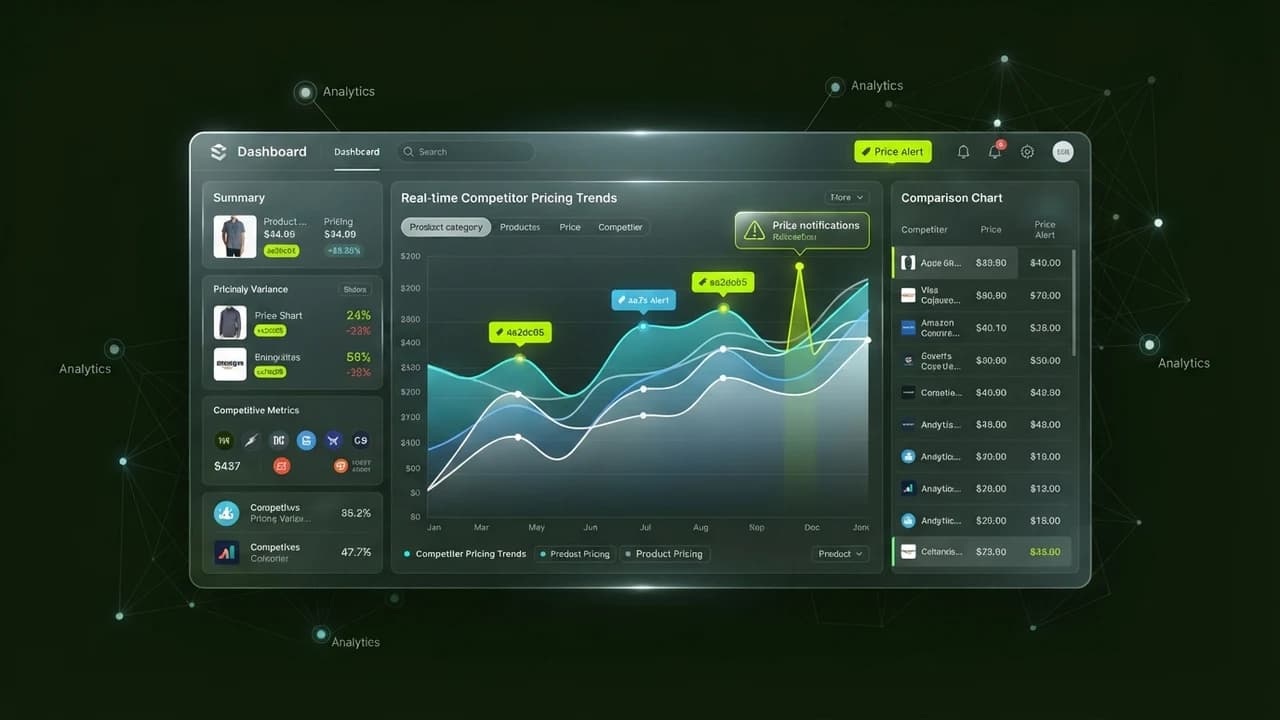
Indian e-commerce brands, retailers, and wholesalers can track competitor product pricing, stock availability, and festival discount promotions automatically across dozens of competitor websites in real time using no-code AI scrapers in 2026.
In competitive retail categories — such as electronics accessories, packaged foods, apparel, and industrial supplies — pricing intelligence dictates commercial survival. If a rival drops their price by 10% or launches a buy-one-get-one promotion on Friday morning, your sales can dry up completely before your merchandising team even notices on Monday. Yet, manually checking 30 competitor websites, recording prices into spreadsheets, and comparing SKU variants consumes 15 to 20 tedious hours of staff time every week. Autonomous AI web scrapers eliminate this operational drain by monitoring competitor catalogs continuously and alerting your team via WhatsApp the instant a competitor alters pricing.
Why Traditional Python Web Scrapers Constantly Break
Historically, web scraping required specialized software engineers writing complex Python BeautifulSoup or Selenium scripts.
These legacy scripts suffer from severe practical limitations:
- Fragile HTML Selectors: The moment a competitor updates their website theme or renames a CSS class, traditional code-based scrapers crash immediately
- Anti-Bot Defenses: Modern e-commerce platforms utilize Cloudflare and reCAPTCHA systems that block simple automated scripts
- High Developer Retainers: Paying software agencies ₹25,000 monthly just to maintain and patch broken web scraping scripts
AI-powered visual scrapers replace brittle code with computer vision and semantic reasoning: the AI navigates the competitor's page exactly like a human shopper, locating prices, stock levels, and product titles visually regardless of underlying code changes.
The 4-Step No-Code Competitor Intelligence Workflow
Step 1: Deploy a Visual No-Code Scraper (Apify or Browse AI)
You do not need to write terminal commands. Visual scraping platforms allow you to train an automated monitor in two minutes:
- Open Browse AI or Apify in your web browser
- Paste the competitor's collection page URL (for example: a rival D2C coffee brand's bestsellers page)
- Click on the screen to show the tool which elements to extract: Product Name, Retail Price, Discounted Sale Price, and Stock Status
How Does Browse AI Handle Changing Layouts?
Browse AI uses computer vision algorithms. If the competitor redesigns their website layout from a grid to a list, the AI continues identifying the product price because it recognizes visual price badges and currency symbols ($ or ₹) like a human reader.
Step 2: Establish Automated Monitoring Schedules
Configure your extraction schedule based on your category velocity:
- Daily 6:00 AM Scan: Extracts current prices across top 10 competitors before your morning merchandising review
- Hourly Flash Sale Detection: During peak festive periods (such as Diwali or Great Indian Festival sales), monitor rival category pages every hour to detect flash price drops instantly
Step 3: Route Extracted Data to Google Sheets & AI Analysis
Using Make.com or n8n, connect your scraper output to a master Competitor Intelligence Google Sheet:
```
[Competitor Scraper Finishes Run] ──▶ [Appends Row in Google Sheets]
│
Triggers Claude / GPT-4o Analysis
▼
[Generates Instant Pricing Variance Summary]
```
Instruct the AI reasoning model with a simple prompt directive:
Compare today's competitor prices against our current retail prices. Flag any SKU where our price is more than 8% higher than the market average. Highlight new competitor product launches.
Step 4: WhatsApp Executive Price Alerts
If the AI identifies that a major rival has discounted their hero SKU by 15%, your automation dispatches an immediate WhatsApp alert to your sales director:
"⚠️ Price Alert: Competitor [Brand X] just dropped their 500g whey protein from ₹1,899 to ₹1,599 (15% off). Our current price: ₹1,799. Tap here to review the pricing sheet: [Link]"
Your team can adjust your own pricing or counter with a targeted WhatsApp promotional broadcast within one hour, protecting your weekend transaction volume.
Performance Breakdown: Manual Monitoring vs Automated AI Scraping
Operational Parameter | Manual Staff Price Checks | Automated AI Competitor Scraping |
|---|---|---|
Monitored Competitors | 3 to 5 stores max | 25 to 50+ stores simultaneously |
Check Frequency | Once a week (often missed) | Daily or hourly automated scans |
Detection of Flash Discounts | 24 to 72 hours late | Under 15 minutes |
Labor Hours Required | 15 hours / week | 0 hours (fully automated) |
Impact on Gross Margins | Reactive price cuts | Strategic, proactive margin defense |
Data-Driven Merchandising for Indian Businesses
Winning in modern commerce does not require racing to the bottom on price; it requires complete operational visibility. When you know competitor prices, stock shortages, and promotional calendars in real time, you make confident, data-backed inventory and pricing decisions that protect your profit margins.
The Zero To AI academy provides practical no-code automation templates, workflow blueprints, and non-coder masterclasses for Indian business operators. Discover actionable guides at [zerotoai.in](https://zerotoai.in).
Frequently Asked Questions (PAA)
Is scraping competitor pricing legal in India?
Yes. Extracting publicly accessible pricing and product data displayed openly on consumer-facing websites for market research is completely legal, provided the scraper does not attempt to breach password-protected portals or extract private customer personal data.
Can websites block no-code AI web scrapers?
Advanced platforms like Apify and Browse AI utilize residential proxy networks and automated browser finger-printing rotation, making automated traffic indistinguishable from human shoppers browsing on mobile devices.
How much does an automated competitor price tracking setup cost?
Platforms like Browse AI and Apify offer generous free starter tiers (covering up to 50 to 100 scrapes per month). Scaling to track 20 competitor stores daily typically costs between ₹1,500 and ₹3,500 monthly.
Can this workflow track competitor stockouts?
Yes. The scraper identifies 'Sold Out' or 'Out of Stock' badges. When a competitor runs out of inventory on a high-demand SKU, you receive an instant alert, allowing you to increase your own Meta ad spend on that exact category and capture unserved demand.
Learn to build AI workflows that handle your busywork — live sessions, real projects, zero code.
See the courseBeginner-friendly