Best AI Course for Beginners in India: Fees and Practical ROI

The best AI course for beginners in India depends on whether you seek theoretical computer science or immediate workplace productivity. For non-coders, practical courses teaching ChatGPT, Claude, and workflow automation under ₹2,000 offer faster return on investment than university bootcamps charging ₹50,000 to ₹3,00,000 for advanced mathematics and Python coding.
Last verified: 13 November 2026. All course fees, curriculum details, and platform links below were verified against live sources on this date.
Every day on LinkedIn and YouTube, Indian professionals get bombarded with edtech advertisements. Fancy landing pages promise that taking an executive post-graduate diploma in Artificial Intelligence will instantly double your salary. Then you look at the price tag: ₹1,50,000 to ₹3,50,000 plus GST, spread across 18 months of high-interest EMI installments.
If your ambition is to become a machine learning research scientist building core foundation models, those deep university degrees make sense. But if you are a digital marketer in Bengaluru, an accountant in Ahmedabad, a small business owner in Jaipur, or a college graduate looking for a job edge, you do not need differential calculus. You do not need to memorize backpropagation algorithms or build convolutional neural networks from scratch.
What you actually need is the ability to use AI tools to solve real business problems faster than your peers.
National workforce research proves that practical execution is where Indian talent excels. According to the Microsoft Work Trend Index 2026 for India, 32% of India's AI workforce are Frontier Professionals actively redesigning daily business operations with AI, twice the global average of 16%. Crucially, 63% of these professionals emphasize human quality control and verification over blind technical generation.
At the same time, NASSCOM's technology skills report (updated through November 2026) highlights 24% annual growth in digital technology spending across India, with employers prioritizing applied problem-solving over static degree certificates. Even NITI Aayog's AI Job Creation Roadmap emphasizes widespread non-coder digital skilling across traditional sectors.
Below is an honest, data-backed guide to find the best ai course for beginners in india based on your exact budget, background, and career goals.
The Two Paths: Academic AI vs Practical Workplace AI
Before spending a single rupee, you must understand the deep divide in modern AI education.
Path A: Theoretical Machine Learning and Data Science
- Target Student: Computer science engineers, aspiring data scientists, and software developers.
- Prerequisites: Python programming, linear algebra, calculus, and probability statistics.
- Tools Taught: PyTorch, TensorFlow, Pandas, Scikit-Learn, and SQL.
- Typical Course Fee: ₹50,000 to over ₹3,00,000 on platforms like upGrad or Great Learning.
- Time Commitment: 6 to 18 months with 10 to 15 hours of weekly study.
Path B: Applied No-Code AI Productivity and Automation
- Target Student: Non-technical professionals, marketers, sales leaders, freelance creators, HR managers, and MSME owners.
- Prerequisites: Basic computer literacy, clear written communication, and logical thinking. Zero coding required.
- Tools Taught: ChatGPT, Claude, Gemini, Make.com, n8n, Canva, and visual app builders.
- Typical Course Fee: ₹0 (free government portals) to ₹1,499 (specialized self-paced courses).
- Time Commitment: 2 to 4 weeks with immediate same-day application at work.
If you do not plan to write Python code every day, enrolling in a Path A bootcamp is an expensive detour. You will spend months struggling with syntax errors rather than mastering the AI tools your manager or clients actually care about.
4 Categories of AI Courses for Beginners in India (2026 Comparison)
Here is how the four primary learning categories in India compare across pricing, syllabus, and career utility as verified on 13 November 2026:
Course Category | Typical Providers | Upfront Course Fee in INR | Coding Required | Syllabus Focus | Best Fit For |
|---|---|---|---|---|---|
1. Applied No-Code Courses | ₹1,499 one-time (lifetime access) | None (0%) | Real-world business workflows, advanced prompts, and no-code automations | Non-coders wanting immediate workplace productivity | |
2. Free Global Conceptual Courses | Free to audit; ₹3,500+ for optional certificate | None (0%) | High-level terminology, ethical governance, and executive overviews | Students wanting high-level literacy before investing | |
3. Free Government Portals | Free video access; ₹1,000 to ₹2,000 exam fee | Varies (Basic Python in many modules) | Academic college curriculum taught by IIT and IIM faculty | College students needing university academic credits | |
4. Executive Bootcamps & PG Diplomas | upGrad, Simplilearn, Great Learning | ₹50,000 to ₹3,00,000+ | Intensive (Python, Math, ML algorithms) | Deep data science models, neural networks, and cloud pipelines | Tech professionals aiming for full-time Data Scientist roles |
For an in-depth fee analysis between domestic and global course providers, see our head-to-head comparison on Zero To AI vs Coursera fees in India.
Category 1: Applied No-Code Courses (Fastest Practical ROI)
Applied courses discard academic filler and focus entirely on commercial productivity.
Our flagship program, the Zero To AI World's Easiest AI Courses (₹1,499 one-time fee), was built specifically for non-technical Indian professionals. The curriculum starts from absolute zero:
- How to talk to LLMs like ChatGPT, Claude, and Gemini without generic prompt templates.
- Building custom AI assistants that remember your company's tone, customer guidelines, and pricing.
- Automating repetitive spreadsheet cleaning, email drafts, and meeting minutes.
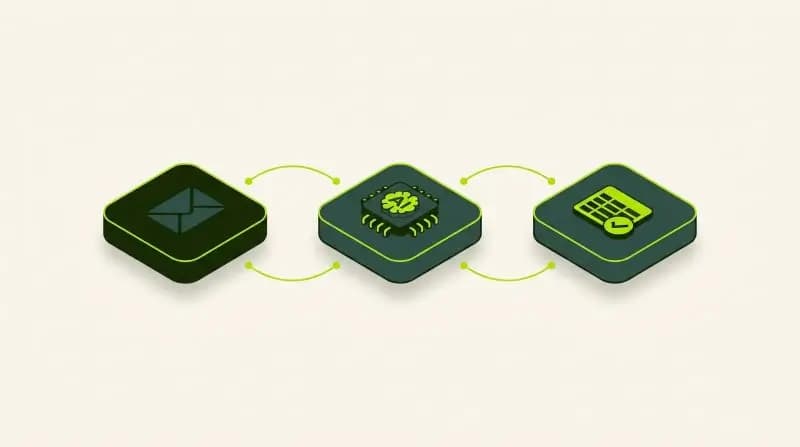
- Hands-on visual workflows that connect tools together without coding.
Because you learn by doing real assignments rather than watching abstract theory, you can implement what you learn the very next morning at work. If your focus is building automated client workflows, you can also explore our 40-Minute AI Agent Workshop for ₹499.
Category 2: Free Global Conceptual Courses
If you want to understand what AI means for society and business before touching specific tools, free international courses are an excellent starting point.
- AI for Everyone by DeepLearning.AI: Taught by Andrew Ng on Coursera, this is the gold standard for conceptual understanding. It explains machine learning concepts, data pipelines, and corporate AI strategy in plain English without a single line of code. You can audit the entire course for free.
- Elements of AI: Created by the University of Helsinki and MinnaLearn at Elements of AI, this free interactive platform introduces fundamental AI logic, probability, and societal impact through short quizzes and exercises.
The only drawback is that these courses remain conceptual. They explain what AI is, but they do not teach you how to extract customer invoices or build WhatsApp automations in an Indian office.
Category 3: Free Indian Government Initiatives (SWAYAM and NASSCOM)
The Government of India provides substantial subsidized and free educational resources:
- SWAYAM Portal: Managed by the Ministry of Education at SWAYAM, this platform hosts semester-long courses produced by faculty from IIT Madras, IIT Kharagpur, and IISc. While course content is free, most modules follow formal university syllabi and frequently require basic Python comprehension.
- FutureSkills Prime: Built collaboratively by MeitY and NASSCOM at FutureSkills Prime, this portal offers government-subsidized skilling pathways and certifications recognized by Indian corporate employers.
These platforms are ideal for university students seeking formal academic credits on their college marksheets.
Category 4: University PG Diplomas and Bootcamps
Commercial bootcamps marketed by platforms like upGrad partner with recognized universities to deliver comprehensive 12-month diplomas.
These programs offer live weekend lectures, dedicated student mentors, peer study groups, and campus alumni status. However, they demand a heavy financial and time investment. Tuition often exceeds ₹1,50,000, and curriculum requirements include Python scripting, linear regression, and algorithmic math. If you are not committed to becoming a full-time software engineer or data analyst, the return on investment for general business professionals is rarely justified.
5 Practical ROI Criteria: How to Evaluate Any AI Course
When evaluating any course advertisement, ask these five objective questions:
- Does it fit my daily job description? If you work in human resources, a module on training convolutional neural networks will never help your career. Look for modules on document parsing, candidate screening, and workflow automation.
- What is the total fee including GST? Watch out for hidden certification fees, exam proctoring charges, or recurring monthly subscriptions that automatically renew on your card.
- Is the instruction in natural, accessible language? Learning complex technology in stiff academic English increases drop-out rates. Clear explanations with relatable Indian examples improve retention dramatically.
- Will I build finished portfolio assets? An employer or client does not care about a paper certificate. They care whether you can show a working custom GPT, an automated spreadsheet, or a live lead capture agent.
- How quickly can I recover the course cost? A ₹1,499 course pays for itself if it saves you five hours of freelance work or helps you close a single ₹10,000 client project. A ₹2,00,000 diploma requires years of career advancement to break even.
Action Plan: Your 14-Day Practical AI Learning Roadmap
You do not need six months to become proficient with modern AI tools. Follow this 14-day schedule:
- Days 1 to 3 (Core Mental Models): Audit Andrew Ng's AI for Everyone on Coursera for free. Understand what generative AI can and cannot do.
- Days 4 to 7 (Applied Prompting and Workflows): Enroll in a structured no-code course like Zero To AI. Learn systematic prompt structuring, context windows, and multi-step reasoning across ChatGPT, Claude, and Gemini.
- Days 8 to 10 (Build Your First Custom Assistant): Configure a custom assistant with specific system instructions, uploading your company's standard operating procedures or past reports to test private document Q&A.
- Days 11 to 14 (Automate One Real Task): Connect your AI assistant to Google Sheets or an email inbox using visual no-code connectors. Measure the exact hours saved each week.
Choose Practical Skills Over Expensive Credentials
The Indian job market is shifting away from theoretical degrees toward demonstrable technical capability. Understanding how to orchestrate generative models and automate routine tasks makes you significantly more productive in any modern organization.
If you want a step-by-step, plain-English roadmap built specifically for non-coders in India, join the Zero To AI World's Easiest AI Courses (₹1,499 one-time). You will get lifetime access, practical workplace templates, and zero confusing math.
Sources
- Zero To AI: World's Easiest AI Courses (accessed 13 November 2026)
- Zero To AI: Build Your First AI Agent in 40 Minutes (accessed 13 November 2026)
- SWAYAM Government Education Portal (accessed 13 November 2026)
- FutureSkills Prime: MeitY and NASSCOM Initiative (accessed 13 November 2026)
- Coursera: AI for Everyone by DeepLearning.AI (accessed 13 November 2026)
- Elements of AI: MinnaLearn and University of Helsinki (accessed 13 November 2026)
- upGrad Executive Learning Portal (accessed 13 November 2026)
- Microsoft Work Trend Index 2026: India's AI Advantage Is Human (published 3 September 2026)
- NASSCOM Technology Shifts and Workforce Priorities (accessed 13 November 2026)
- NITI Aayog: Roadmap for Job Creation in the AI Economy (October 2025)
Learn to build AI workflows that handle your busywork — live sessions, real projects, zero code.
See the courseBeginner-friendly