
Free AI Learning Roadmap: Practical 2026 Guide for Indian Pros
A practical free ai learning roadmap india provides working professionals with a structured 30-day study plan covering foundational literacy, workplace prompt frameworks, and no-code automations without computer science bootcamps. Non-technical employees in marketing, sales, and operations can complete credible free university programs in under five hours weekly.
Last verified: 14 November 2026
Working professionals across India face growing pressure to adapt to artificial intelligence tools in their daily roles. Job boards in Bengaluru, Mumbai, Gurugram, and Hyderabad increasingly list AI proficiency as a preferred qualification for marketing managers, human resource recruiters, financial analysts, and project leads.
Unfortunately, the private education market in India has responded with aggressive, overpriced bootcamps. Private training institutes frequently market "Executive AI Masterclasses" costing anywhere from ₹40,000 to ₹1,50,000. These courses often overwhelm non-coders with complex Python syntax, calculus formulas, and tensor mathematics that have little relevance to daily office productivity.
You do not need to spend tens of thousands of rupees or learn to write code to master artificial intelligence for your career. Prestigious universities, global technology leaders, and the Government of India provide world-class educational curriculums completely free of charge.
By following a structured free ai learning roadmap india, you can systematically master practical office tools in thirty days by dedicating forty-five minutes each morning.
Why Non-Technical Professionals Need Practical AI Literacy
Corporate leadership in Indian enterprises does not expect business managers to train foundational machine learning models. Instead, organizations reward professionals who know how to solve three practical operational challenges:
First, how to draft clear, structured prompts that produce reliable business reports, competitive research summaries, and client proposals on the first attempt.
Second, how to evaluate AI-generated outputs critically, detecting factual errors, arithmetic mistakes, and compliance risks before circulating materials to senior management.
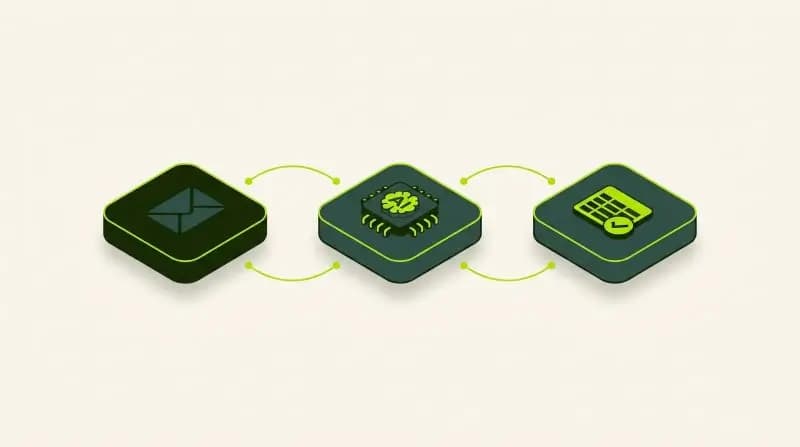
Third, how to connect daily office software, like email inboxes and spreadsheets, to intelligent models using drag-and-drop tools to automate repetitive data entry.
When you master these three competencies, you cut your weekly administrative workload by ten to fifteen hours. You deliver higher quality strategic work faster, making yourself indispensable during annual performance appraisals without ever writing a script.
Comparison of Top Free AI Learning Platforms in India
Several authoritative platforms offer legitimate, high-quality AI instruction for working adults. Here is an objective comparison of the top free options:
Platform / Program | Primary Provider | Financial Cost | Code Requirement | Verifiable Certificate | Ideal Career Track |
|---|---|---|---|---|---|
Elements of AI | University of Helsinki & Reaktor | 100% Free | None (Zero coding required) | Free verified digital certificate | Beginners, managers, and non-technical business professionals |
Google Cloud Skills Boost | Free micro-courses | None for introductory tracks | Free digital completion badges | Marketers and office workers wanting Google credentials | |
SWAYAM / NPTEL | Ministry of Education & IITs | 100% Free audit (optional ₹1,000 exam) | Low to High depending on course | Formal IIT certificate (via paid proctored exam) | Professionals wanting government and academic recognition |
DeepLearning.AI Short Courses | DeepLearning.AI | 100% Free access | None for workplace courses | Certificate on paid platform tiers | Professionals wanting rapid 1-hour skill upgrades |
Program availability verified on 14 November 2026 via the [Elements of AI course](https://www.elementsofai.com), the [SWAYAM government portal](https://swayam.gov.in), and [Google Cloud Skills Boost](https://www.cloudskillsboost.google).
For non-technical professionals, starting with Elements of AI provides the clearest conceptual understanding of machine capabilities without confusing mathematical jargon.
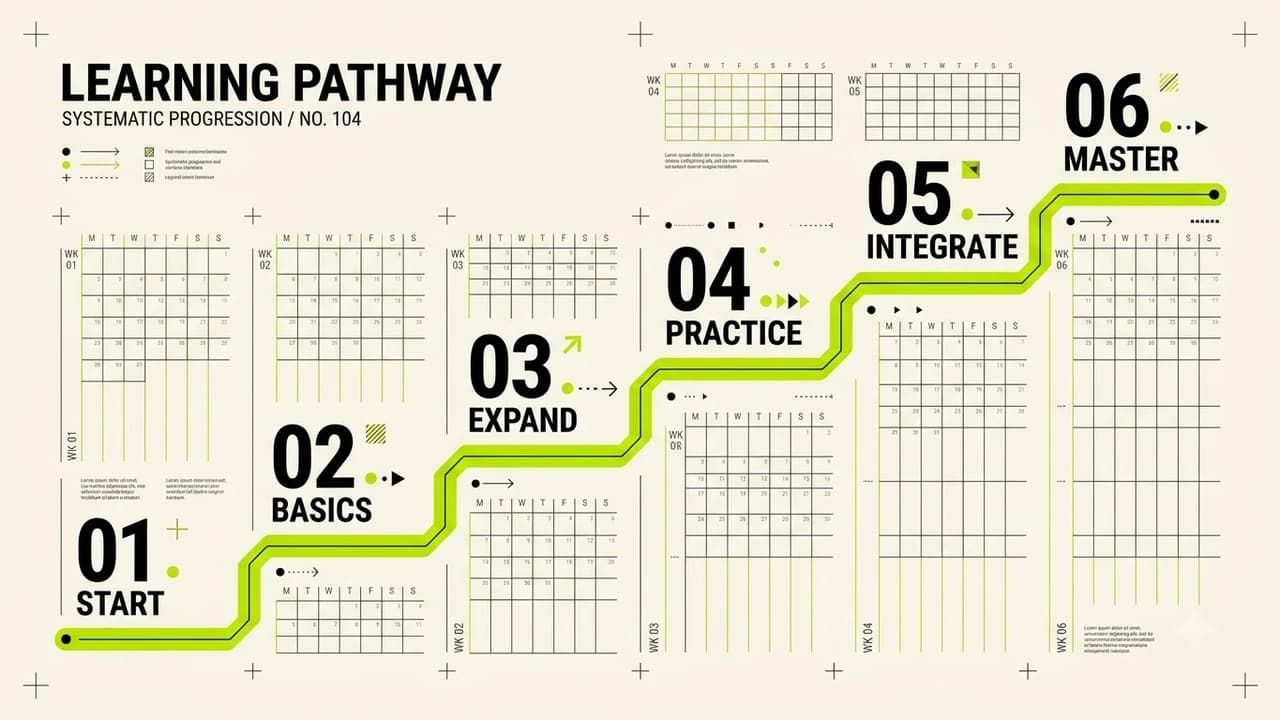
The 30-Day Step-by-Step Free Learning Roadmap
To build real competence without burning out, divide your learning journey into four distinct weekly phases. Commit thirty to forty-five minutes every weekday:
Phase 1: Foundational Literacy and Mental Models (Week 1, Days 1 to 7)
Your goal in the first week is to demystify how language models work so you understand their realistic strengths and weaknesses.
- Primary Resource: Complete parts 1 and 2 of the free Elements of AI online curriculum.
- Key Concepts to Master: The difference between traditional rule-based software and probabilistic prediction; what machine learning models can realistically achieve; why hallucinations occur.
- Practical Exercise: Pick three routine tasks you performed last week. Write down why each task is or is not suitable for automation based on probabilistic risk.
- Expected Time Commitment: 4 hours total across the week.
Phase 2: Workplace Prompt Architecture (Week 2, Days 8 to 14)
In your second week, transition from understanding concepts to driving daily workplace productivity through structured prompting frameworks.
- Primary Resource: Audit the foundational modules of Google AI Essentials and complete introductory tracks on Google Cloud Skills Boost.
- Key Frameworks to Master: Role assignment (assigning persona context), task constraints (output formatting rules), few-shot prompting (giving concrete examples of desired output), and chain-of-thought instructions.
- Practical Exercise: Create a reusable prompt template for your most common weekly work document, such as an executive meeting summary or client status email.
- Expected Time Commitment: 4.5 hours across the week.
Phase 3: No-Code Automation and Workflow Systems (Week 3, Days 15 to 21)
During the third week, move beyond single chat windows and learn how automated systems process information across multiple applications.
- Primary Resource: Free video tutorials and documentation from open visual automation platforms, combined with short conceptual modules on DeepLearning.AI.
- Key Skills to Master: Understanding triggers and actions; passing data from web forms into spreadsheets; using language models to categorize incoming customer support tickets.
- Practical Exercise: Map out a visual flowchart of your department's client onboarding workflow on paper, identifying where text extraction saves manual typing.
- Deepening Your Practice: To accelerate your workflow building with hands-on exercises, explore our structured build your first AI agent course.
- Expected Time Commitment: 5 hours across the week.
Phase 4: Practical Portfolio Proof and Workplace Impact (Week 4, Days 22 to 30)
The final week focuses on documenting your new capabilities so you can demonstrate tangible commercial value to your employer or prospective clients.
- Primary Resource: Official portal documentation and institutional case studies on the NPTEL program portal.
- Key Deliverables to Produce: Build a "Workplace AI Playbook" containing five tested prompt templates tailored to your company's industry, complete with sample before-and-after outputs.
- Practical Implementation: Implement one automated workflow in your real work routine, measure the exact hours saved over five working days, and present the results in your team meeting.
- Expected Time Commitment: 4 hours across the week.
How to Build a Verifiable Non-Coder Portfolio
Completing courses is only half the battle. To gain recognition from employers and recruiters across Indian corporate hubs, you must showcase proof of execution.
Follow these three portfolio strategies:
- Publish Case Summaries on LinkedIn: Instead of simply sharing course completion certificates, write a short post breaking down an operational bottleneck you solved. Explain the problem, share the prompt architecture you used, and state the hours saved.
- Create Reusable Department SOPs: Offer to document your team's routine processes using structured AI prompts. When your manager sees standard operating procedures generated in minutes, your leadership value increases immediately.
- Curate an Internal Prompt Library: Build a shared document for your colleagues containing tested prompt templates for vendor negotiations, customer inquiries, and data analysis.
For professionals seeking comprehensive guided curricula that focus purely on business execution without code, review the complete catalog of Zero To AI practical courses.
Essential Checklist for Consistent Self-Paced Learning
Sustaining self-study alongside a demanding corporate job requires discipline and structure. Apply this daily operational checklist:
- Block a non-negotiable 45-minute study window every morning before opening office email.
- Focus on one foundational course at a time rather than signing up for ten different platforms.
- Test every conceptual framework on your actual daily office tasks within twenty-four hours of learning.
- Avoid getting distracted by social media hype announcing hundreds of experimental software tools daily.
- Focus on mastering the enduring fundamentals: clear prompt instructions, logical verification, and clean business communication.
- Keep track of free educational announcements on domestic platforms by visiting free AI learning resources.
Common Traps That Derail Working Professionals
Many Indian professionals begin their upskilling journey with enthusiasm but drop out within two weeks. Avoid these common study mistakes:
First, do not enroll in developer-oriented computer science courses if your goal is business productivity. If a course begins with installing Python environments, configuring terminal paths, or calculating linear algebra matrices, it is intended for software engineers. Non-coders should immediately pivot to applied productivity courses.
Second, avoid passive video watching. Watching an instructor demonstrate prompt engineering creates an illusion of competence. You only retain skills when you open a model interface and practice refining prompts yourself until the output matches professional standards.
Third, do not pay for expensive certifications before finishing free foundational courses. Completing free university curriculums proves your dedication and provides the fundamental clarity needed to decide whether advanced specialized credentials are worth your money.
Learn to build AI workflows that handle your busywork — live sessions, real projects, zero code.
See the courseBeginner-friendly