.jpg&w=1080&q=75)
How Indian Solopreneurs Build and Monetize AI Influencers in 2026: Complete Non-Coder Breakdown
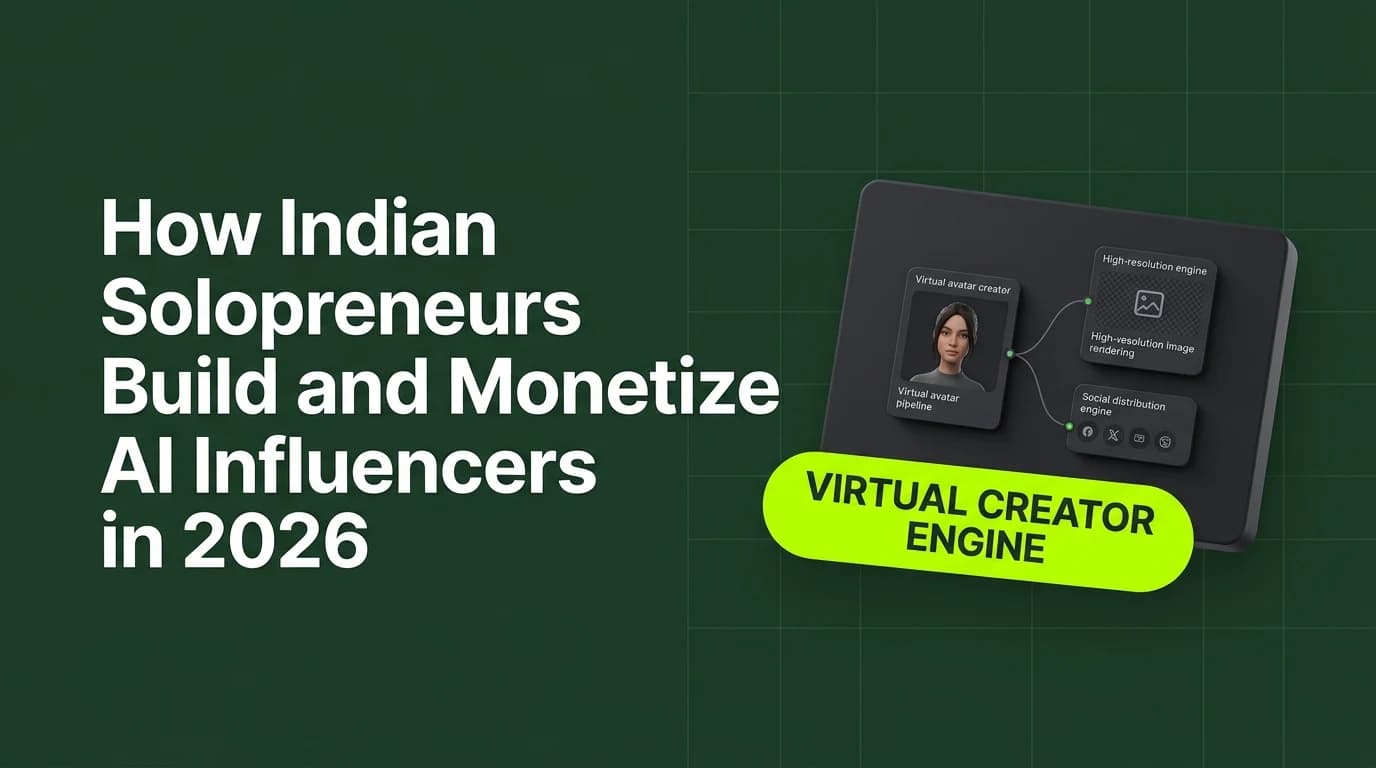
Indian solopreneurs build and monetize AI influencers by combining photorealistic image generation, automated face-swapping pipelines, consistent character prompting, and brand sponsorship monetization without hiring models.
The creator economy in India is undergoing a massive shift with the rise of hyper-realistic digital avatars and synthetic creators. Unlike traditional social media influencers who require expensive camera gear, studio lighting, travel logistics, and personal availability, AI influencers operate 24/7 with zero physical constraints. In 2026, independent Indian creators, digital marketing agencies, and e-commerce solopreneurs are turning virtual influencers into profitable media assets generating sustainable revenue streams through product placement, affiliate marketing, and brand sponsorships.
Understanding the step-by-step technical architecture and monetization models enables non-technical founders to launch consistent digital persona brands without writing code.
Traditional Influencers vs AI Virtual Influencers: Operational Breakdown
Comparing traditional content creation against synthetic AI influencer pipelines highlights dramatic cost and speed advantages:
Operational Dimension | Traditional Human Influencer | Virtual AI Influencer Engine |
|---|---|---|
Production Cost Per Post | ₹5,000 to ₹50,000 (Shoots & Studio) | ₹50 to ₹200 (API Tokens & Compute) |
Content Output Capacity | 3 to 7 posts per week | 20 to 50 posts per week |
Character Consistency | Varies based on mood & scheduling | 100% Consistent visual identity via LORA & seeds |
Brand Risk & Availability | High (Scheduling delays & personal issues) | Zero (Full founder control & instant revisions) |
Scalability Scope | Single personality & physical limits | Unlimited multilingual localized personas |
The 4-Stage No-Code AI Influencer Creation Pipeline
Building a successful virtual influencer requires a structured visual pipeline that maintains character face consistency across different poses, lighting conditions, and outfits:
[Phase 1: Character Lore & Face Seed] ──> [Phase 2: High-Res Image Generation] ──> [Phase 3: Automated Video Lipsync] ──> [Phase 4: Multi-Channel Distribution]1. Character Lore & Seed Generation
Define the persona backstory, style aesthetics, target demographic, and visual parameters. Generate a high-resolution master face anchor using stable diffusion models or Midjourney to establish the core reference identity.
2. High-Resolution Pose & Outfit Rendering
Utilize consistent seed prompting, ControlNet pose matching, or LoRA (Low-Rank Adaptation) weights to place the character in diverse settings—such as fashion shoots in Mumbai, tech reviews, or travel destinations.
3. Automated Video & Lipsync Animation
Convert static rendered images into fluid vertical video clips using open-source video models, and match spoken audio tracks with automated lipsync software for Instagram Reels and YouTube Shorts.
4. Content Distribution & Automated Fan Engagement
Connect social media scheduling tools to publish content automatically and deploy automated direct-message (DM) responder bots to engage followers and distribute affiliate links.
4 Verified Monetization Channels for Indian AI Influencers
Solopreneurs in India monetize virtual creators across four primary commercial channels:
- E-Commerce Product Photography: Posing virtual avatars with apparel, jewelry, or cosmetics for D2C brands, eliminating physical model casting expenses.
- Affiliate Marketing Engines: Sharing curated lifestyle products, software deals, and fashion accessories with tracking links in bio links and automated DMs.
- Regional Brand Partnerships: Collaborating with regional Indian brands looking for innovative digital campaign visual assets.
- Digital Asset & Preset Sales: Selling custom digital merchandise, prompt guides, and aesthetic preset packages to aspiring creators.
Learn to build AI workflows that handle your busywork — live sessions, real projects, zero code.
See the courseBeginner-friendly