.jpg&w=1080&q=75)
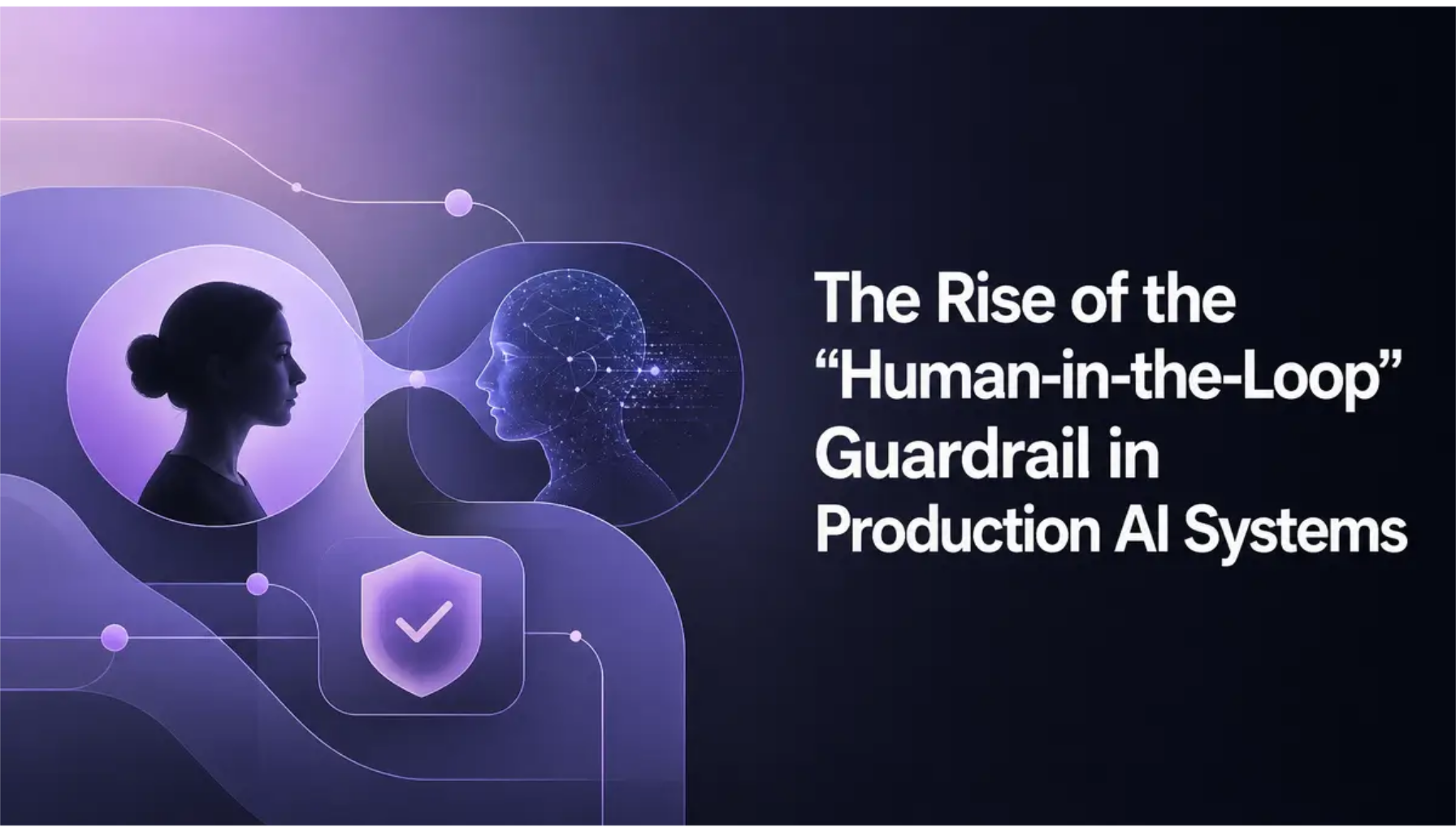
The Rise of the "Human-in-the-Loop" Guardrail in Production AI Systems

The Rise of the "Human-in-the-Loop" Guardrail in Production AI Systems
When businesses first start experimenting with artificial intelligence, the dream is often total autonomy: a system that runs entirely on its own, answering emails, booking client calls, managing accounts, and posting content with zero human intervention.
However, companies attempting to deploy fully autonomous AI agents in production quickly run into a hard truth.
No matter how advanced LLMs become, they still suffer from occasional hallucinations, context drifting, and edge-case errors. When an autonomous system operates directly on your production databases or communicates with customers unchecked, a single error can damage your brand, lead to data loss, or create legal liabilities.
This is why human in the loop ai (HITL) has transitioned from an afterthought to a core requirement for production-grade AI systems.
Here is why collaborative guardrails are rising, and how to build them into your workflow architecture.
The Autonomy Trap: Why 100% Autonomous Fails
Fully autonomous agents are highly capable in sandboxed environments, but real-world data is messy, unpredictable, and constantly changing. Here is why pure autonomy fails in production:
• The Jagged Frontier of LLM Capability: Models are excellent at complex tasks but can occasionally fail on simple logical variations. If an agent is 99% accurate, that 1% error rate represents a ticking time bomb at scale.
• Lack of "Taste" and Context: AI can generate grammatically correct sentences, but it struggles with brand voice, emotional nuance, and cultural alignment. A human editor ensures the output has "soul."
• Irreversible Write Actions: Reading data (e.g., retrieving files, checking inventory) is safe. Writing data (e.g., sending emails, refunding customers, updating records) has permanent consequences.
To unlock the speed of automation without taking on existential business risks, you must pair the AI with human guardrails.
Designing the Strategic Human Gate
A good human-in-the-loop system does not slow down operations; it streamlines them. The goal is to offload 90% of the manual labor (research, drafting, categorization, extraction) to the AI, while keeping the human in control of the final 10% (verification and execution).
AI Autonomy Phase (90% of Time)             Human Gate Phase (10% of Time)
┌─────────────────────────────────┐         ┌──────────────────────────────┐
│  • Web Research                 │         │                              │
│  • Data Extraction              ├────────►│  • Review Draft              │
│  • Draft Response / Proposal    │         │  • Click [Approve] / Edit    │
│  • Compliance Check             │         │                              │
└─────────────────────────────────┘         └──────────────┬───────────────┘
                                                           │
                                                           ▼
                                            ┌──────────────────────────────┐
                                            │      Production Action       │
                                            │      (Send API Payload)      │
                                            └──────────────────────────────┘
Here are three ways to design strategic human gates:
1. The Interactive Notification Gate
Instead of requiring employees to log into complex internal software, push notifications to the platforms they already use, like Slack, Microsoft Teams, or Discord.
• Slack Webhook Example: When a customer outreach agent drafts a proposal, send the draft to a dedicated #sales-approvals channel. Include key data points (client name, quote amount, pitch) and two interactive buttons: [Approve & Send] and [Edit Draft].
2. The Sandbox Queue (Dashboard)
For high-volume operations, build a unified dashboard (using tools like Retool, Appsmith, or custom React interfaces).
• The dashboard presents a queue of pending actions.
• Operators see the source document, the agent's summary, and the proposed response side-by-side.
• They can approve, edit, or reject items with keyboard shortcuts, completing dozens of approvals in minutes.
3. Confidence-Based Escalation Routing
Rather than gating every single run, route runs dynamically based on the model's confidence scores or business rules.
• Low Risk (Auto-Execute): A routine customer support inquiry requesting documentation links can be auto-sent if the model confidence is above 95%.
• Medium Risk (Human Review): A request for a feature explanation is routed to the Slack review queue.
• High Risk (Human Escalate): A cancellation or refund request bypasses the automated draft altogether and is directly assigned to a human customer representative.
The Zero To AI Philosophy: Humans as System Directors
At Zero To AI, we teach businesses how to design workflows where humans act as supervisors, not manual processors.
When you design a human in the loop ai workflow, you are not slowing down your team. You are empowering them. A single employee who once spent their entire day writing copy can now oversee ten copywriting agents, focusing their time on refining, polishing, and verifying the outputs.
Autonomy is the technology; collaboration is the strategy. By building human guardrails into your AI pipelines, you protect your brand, maintain quality, and scale operations with absolute confidence.
Learn to build AI workflows that handle your busywork — live sessions, real projects, zero code.
See the courseBeginner-friendly