
.jpg&w=1080&q=75)
Prompt Engineering 101: The Skill That Pays in 2026

Prompt Engineering 101: The Skill That Pays in 2026
The gap between someone who uses AI and someone who getsres'ultsfrom AI almost always comes down to one thing: how they write their prompts.
A weak prompt gets a generic answer. A well-engineered prompt gets a precise, actionable, high-quality output that would have taken hours to produce manually.
Prompt engineeringis the skill of communicating with AI models in a way that consistently gets the best possible output. It requires zero coding. It works across every AI tool — Claude, ChatGPT, Gemini, and beyond. And in 2026, its one of the highest-ROI skills you can build.
This guide covers the fundamentals: what prompt engineering is, the core techniques, and real examples you can use today.
What Is Prompt Engineering (and Why Does It Matter)?
A prompt is any instruction you give to an AI model. Prompt engineering is the practice of crafting those instructions deliberately — with structure, context, and constraints that guide the AI toward the output you actually need.
Think of it like this: an AI model is extraordinarily capable but completely literal. It will do exactly what you ask, interpreted as precisely as possible. If your ask is vague, the output is vague. If your ask is specific, structured, and well-contextualized, the output is specific, structured, and useful.
In 2026, employers in marketing, operations, content, product, and virtually every knowledge-work field are actively seeking people who can work with AI effectively. Prompt engineering is the skill that separates someone who occasionally uses ChatGPT from someone who can build repeatable AI workflows that produce professional-grade output reliably.
The 4 Elements of a Strong Prompt
Before getting into techniques, understand the four components every high-quality prompt shares:
1. Role— Tell the AI who it is.You are a senior copywriter specializing in SaaS email marketing.
2. Task— Tell the AI exactly what to produce.Write a 5-email onboarding sequence for a new user who just signed up for a project management tool.
3. Context— Give it the information it needs to do the task well.The tool is called Taskflow. Users are typically team leads at companies with 10–50 employees. The tone should be warm but professional. Users are busy — they dont want long emails.
4. Format— Tell it how to structure the output.Format each email with: Subject Line, Preview Text, Body (3–4 short paragraphs), and a single clear CTA.
When you combine all four, you get dramatically better results than a one-line request. This alone — just adding role, context, and format — will improve 80% of your AI interactions immediately.
Core Technique 1: Zero-Shot vs. Few-Shot Prompting
Zero-shotmeans giving the AI a task with no examples. It relies entirely on its training to interpret what good looks like.
Example:Write a LinkedIn post about the importance of AI literacy.
This works for simple, well-defined tasks. For anything nuanced or brand-specific, it often produces generic output.
Few-shotmeans showing the AI examples of what you want before asking it to do the task. It calibrates the model to your specific style and quality bar.
Example:Here are two LinkedIn posts Ive written in the past that performed well: [example 1] [example 2]. Now write a new post about AI literacy in the same voice and format.
Few-shot prompting is one of the most powerful techniques for getting consistent, on-brand output. Use it whenever you need to match a specific style — your own writing voice, a clients brand tone, or a particular format that works for your audience.
Core Technique 2: Chain-of-Thought Prompting
Chain-of-thought (CoT) prompting tells the AI to reason through a problem step by step before giving you the final answer.
For complex tasks — analysis, strategy, problem-solving — this dramatically improves output quality because the AI shows its work and catches logical errors in its own reasoning.
How to trigger it: Add phrases like:
- Think through this step by step before answering.
- Reason through each part of this problem before giving me your conclusion.
- Before writing the final version, outline your approach and the key decisions youre making.
Example without CoT:Should I price my AI consulting service at $150 or $300 per hour?→ Generic answer based on averages.
Example with CoT:Im an AI consultant targeting small e-commerce businesses. I have 6 months of experience and 3 client case studies showing measurable ROI. Think through the factors that should influence my hourly rate — market positioning, client budget expectations, value delivered, and competitive differentiation — then give me a recommendation with reasoning.→ Specific, reasoned recommendation you can actually use.
Core Technique 3: Constraint Prompting
Constraints are instructions that limit what the AI produces — and theyre often what separates a usable output from a rambling one.
Common useful constraints:
- Length: In under 150 words / In exactly 3 bullet points / In a single paragraph
- Tone: Write as if explaining to a smart 12-year-old / Formal, no jargon / Conversational, first-person
- Exclusions: Do not use the words leverage, synergy, or game-changer / Avoid clichés
- Perspective: Write from the perspective of someone who is skeptical of this idea
- Format: Use numbered lists, no bullet points / Use headers every 150 words
Constraints feel restrictive, but theyre actually liberating — both for you (you get exactly what you need) and for the AI (clear constraints reduce the search space and improve output quality).
Core Technique 4: Iterative Prompting (The Feedback Loop)
The best AI outputs rarely come from a single prompt. They come from iteration — treating your conversation with an AI like a collaborative editing session.
The iterative process:
- Start with a solid structured prompt (role + task + context + format)
- Review the output — whats good? Whats wrong? Whats missing?
- Give specific, actionable feedback:The second paragraph is too vague. Rewrite it with a specific example of a business that faced this problem.
- Keep refining until the output meets your standard
This is how professionals actually use AI. Not a single magic prompt — a dialogue. The skill is knowing how to give good feedback to the AI to guide it toward the output you need.
Real Prompt Templates You Can Use Today
Blog post section rewrite:You are a content editor who specializes in making technical content accessible to non-technical readers. Rewrite this paragraph in plain language, keeping all the key information but removing jargon. Target reading level: 8th grade. Maximum 80 words: [paste paragraph]
Cold email draft:You are an experienced B2B sales copywriter. Write a cold email to [target role] at [company type]. The offer is [your service]. The hook should reference [relevant pain point]. Keep it under 100 words. End with a low-commitment CTA — asking for a 15-minute call, not a sale.
Meeting summary:Summarize these meeting notes into: (1) Key decisions made, (2) Action items with owners and deadlines, (3) Open questions that need follow-up. Use bullet points for each section. Notes: [paste notes]
Job application tailoring:I am applying for [job title] at [company]. Here is the job description: [paste]. Here is my resume: [paste]. Rewrite my professional summary (3–4 sentences) to directly reflect the language and priorities in this job description without fabricating experience.
How to Turn Prompt Engineering Into Income
Prompt engineering isnt just a productivity skill — its a service you can sell.
Prompt packs: Create and sell curated sets of high-quality prompts for specific use cases. A 50 Claude Prompts for Freelance Copywriters pack on Gumroad at $19 can sell hundreds of copies.
AI workflow consulting: Businesses need someone to build repeatable AI workflows for their teams. Prompt engineering is the foundation of every effective AI workflow. Knowing it deeply makes you invaluable.
Content services: Clients who hire you for content creation arent paying for your typing speed. Theyre paying for your judgment — knowing how to prompt AI to produce content that sounds human, matches brand voice, and achieves the goal. Prompt expertise is your core value-add.
The skill floor is low. The ceiling is high. You can start applying what you learned in this article today.
Ready to put these skills to work? Read:7 Real Ways to Make Money With AI in 2026.
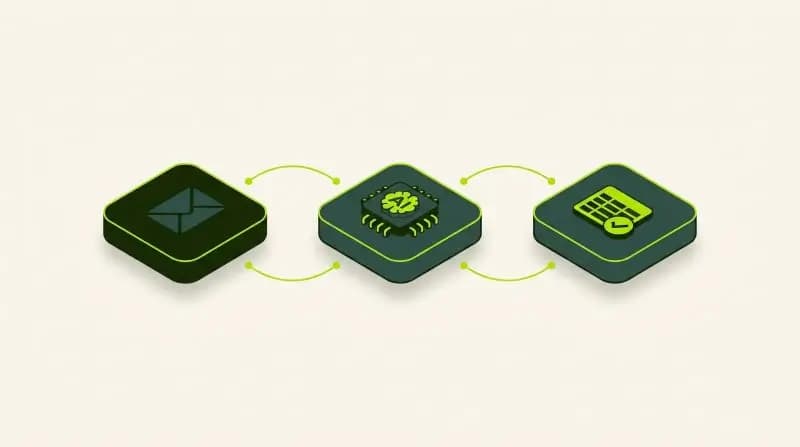
Learn to build AI workflows that handle your busywork — live sessions, real projects, zero code.
See the courseBeginner-friendly