.jpg&w=1080&q=75)
SEO, GEO & AEO: The Future of Search Optimization Explained

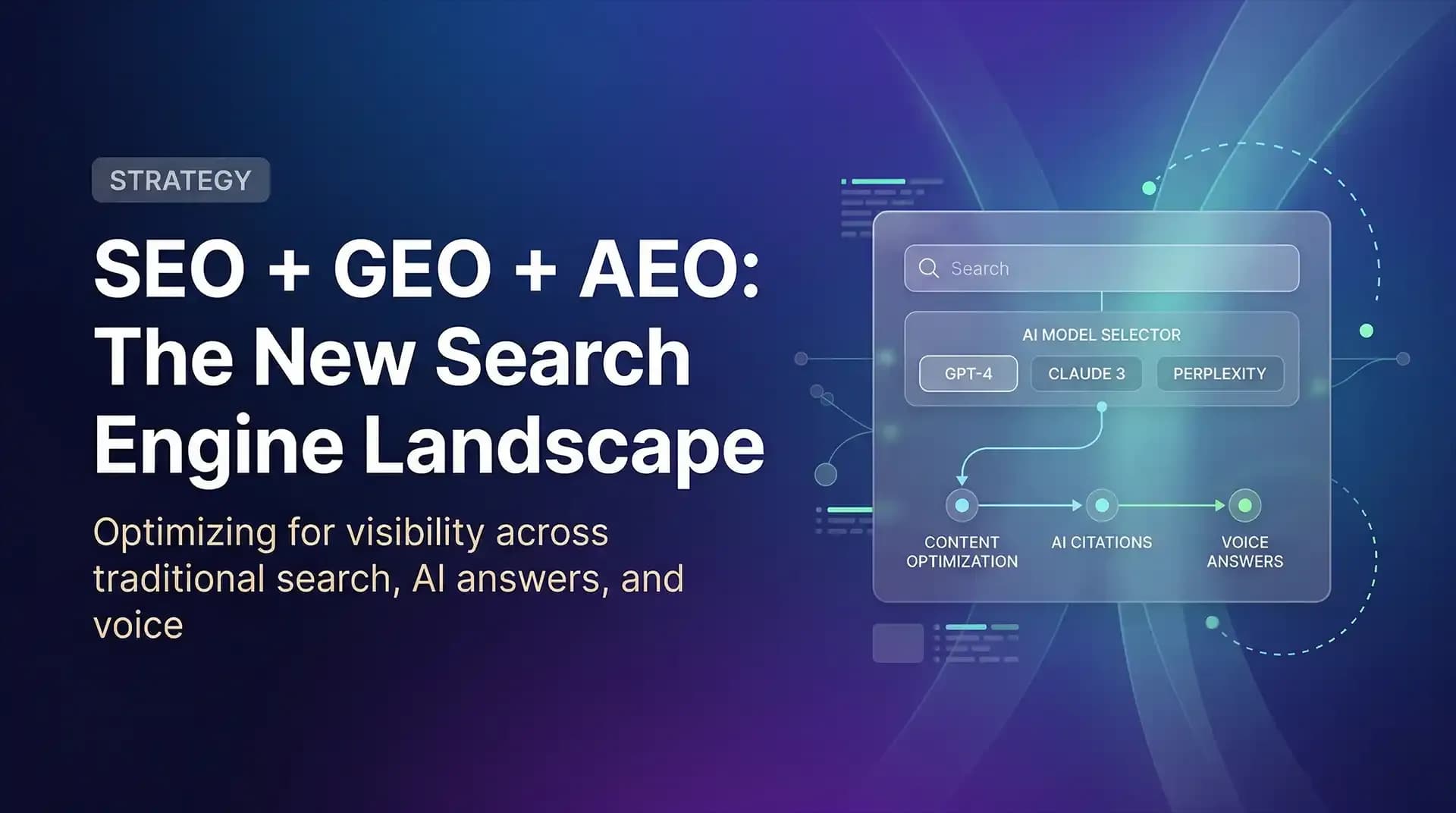
Search is no longer just about ranking on Google. With the rise of AI-powered tools like ChatGPT, Perplexity, and Googles AI Overviews, the way people find information is fundamentally changing. To stay visible, brands need to understand and implement three interconnected strategies: SEO, GEO, and AEO.
What Is SEO (Search Engine Optimization)?
SEO is the practice of optimizing your website and content to rank higher in traditional search engines like Google and Bing. It remains the foundation of digital visibility and delivers compounding returns over time.
The core pillars of SEO include:
- On-Page SEO:Keyword research, content quality, meta tags, headings, and internal linking.
- Technical SEO:Site speed, mobile-friendliness, crawlability, Core Web Vitals, and structured data.
- Off-Page SEO:Backlink building, brand mentions, and domain authority.
- Local SEO:Optimizing for location-based searches and Google Business Profile listings.
What Is GEO (Generative Engine Optimization)?
GEO is the emerging practice of optimizing your content to appear in AI-generated responses — from tools like ChatGPT, Googles AI Overviews, and Perplexity. Unlike traditional SEO which targets search rankings, GEO targets AI citations.
Key GEO strategies include:
- Writing content that is factual, comprehensive, and well-cited.
- Structuring information clearly so AI models can extract and summarize it accurately.
- Building topical authority so AI engines trust and reference your domain.
- Using natural, conversational language that matches how AI processes queries.
What Is AEO (Answer Engine Optimization)?
AEO is about optimizing content to directly answer specific user questions — particularly for voice search, Googles Featured Snippets, and AI chatbot responses. With zero-click searches on the rise, AEO ensures your brand is the answer, not just a result.
Best practices for AEO:
- Write concise, direct answers to common questions in your niche.
- Use FAQ sections and structured Q&A content formats throughout your pages.
- Implement schema markup (FAQ, HowTo, Speakable) to help search engines surface your answers.
- Target long-tail, conversational queries that match how people speak to voice assistants.
How SEO, GEO & AEO Work Together
Think of these three as layers of a modern search strategy:
- SEObuilds your foundation — organic visibility, domain trust, and long-term rankings.
- AEOcaptures user intent — getting your answers pulled into featured snippets and voice results.
- GEOfuture-proofs your visibility — ensuring AI systems reference and cite your brand in their responses.
Key Takeaways
- Traditional SEO is still essential but no longer sufficient on its own.
- Brands that invest in GEO and AEO now will have a significant edge as AI search continues to grow.
- Content quality, topical authority, and clear structure are the common thread across all three disciplines.
Final Thoughts
The search landscape is no longer one-dimensional. Brands that understand and implement SEO, GEO, and AEO together will dominate visibility across all touchpoints — whether users are searching on Google, asking an AI chatbot, or using a voice assistant. Start by auditing your current content, identify gaps in each area, and build a unified optimization strategy for the AI-first web.
Learn to build AI workflows that handle your busywork — live sessions, real projects, zero code.
See the courseBeginner-friendly