.jpg&w=1080&q=75)
Is the AI Bubble Leaking? What the 'Stargate' Project Failure Means for You

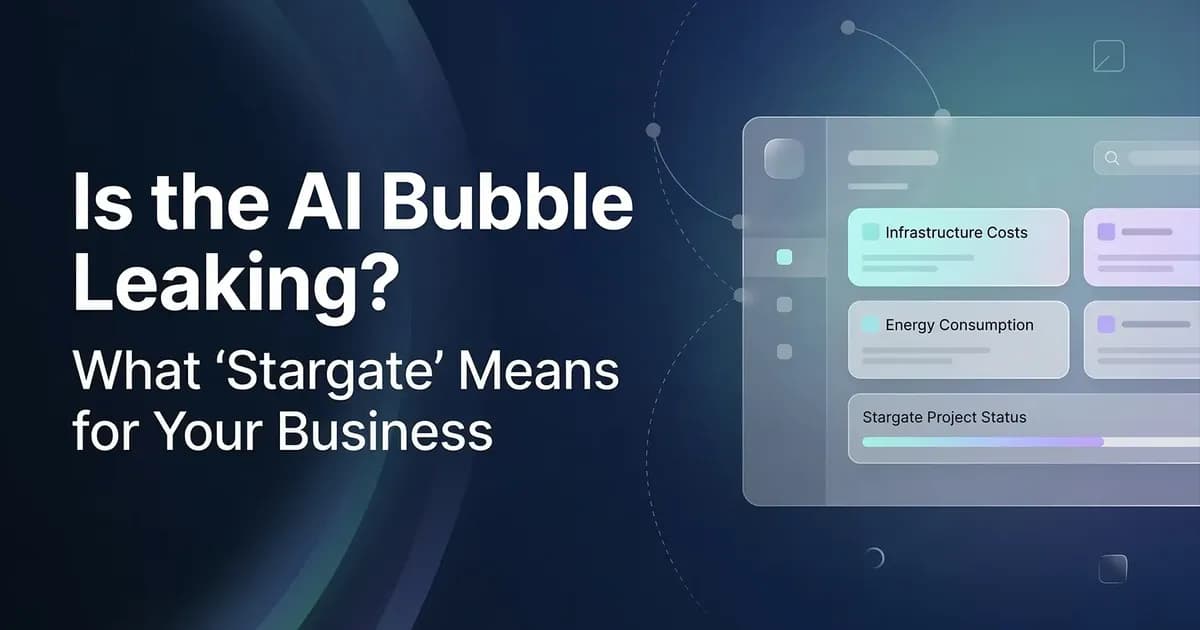
Is the AI Bubble Leaking? What the 'Stargate' Project Means for You
For the last three years, the narrative has been one of unstoppable growth. But in March 2026, the first major cracks have appeared in the infrastructure of Big Tech.
The headline shaking the industry is the reported breakdown in negotiations for "Stargate," the $500 billion supercomputer project intended to power the next generation of OpenAI’s models. Between astronomical energy costs and the struggle to secure 6 gigawatts of power, the project has hit a wall.
Is this the "AI Bubble" finally leaking? And more importantly, what does this high-level infrastructure crisis mean for your small business or startup?
At zerotoai, we look past the hype to the utility. While the "Billionaire Space Race" for compute hits obstacles, the actual value of AI for the average person is stronger than ever. Here is our breakdown of the March 2026 AI news.
Stargate: The $500 Billion Supercomputer That Almost Was
To understand the crisis, you have to understand the scale. Stargate wasn't just a data center; it was an attempt to build a city-sized computer that could handle "Agentic Reasoning" at a global scale.
Why it stalled:
• Power Grid Strain: Data centers are consuming 10% of the U.S. power grid. Negotiating for 6 gigawatts is no longer just a business deal; it's a national security issue.
• Diminishing Returns: Some experts argue that simply "throwing more hardware" at AI models is starting to show diminishing returns in intelligence.
• The Oracle Standoff: Reports suggest OpenAI and Oracle couldn't agree on the "Silicon Sovereignty" of the project—who owns the hardware when the contract ends?
The Infrastructure Wall: Power Grids, GPU Shortages, and Scaling
We are hitting the "Physical Limit" of AI growth. You can write code in a vacuum, but you can't run a GPU without electricity and cooling.
In 2026, the shortage isn't just about chips; it's about Transformers (the electrical kind) and Cooling Systems. This bottleneck is forcing Big Tech to pivot. Instead of making "Bigger" models, they are being forced to make "Smarter" ones.
This is actually good news for you.
Why Small Businesses Should Care About Big Tech’s Infrastructure Crisis
When the "Hype Era" ends, the "Value Era" begins.
If Big Tech can't build a $500 billion supercomputer, they will focus on making the AI you already have more efficient. We are seeing a massive surge in "Small Language Models" (SLMs) that run on your phone or laptop with incredible precision.
The shift for you:
• Less reliance on the "Big Flagships": You don't need GPT-6 to automate your customer service. GPT-4o-mini or a local Llama model is already 10x smarter than the average task requires.
• Cost Stability: As the race for the "Super Model" slows down, the price of "Utility AI" is plummeting.
From "Hype" to "Utility": The 2026 Shift in AI Investment
The "Bubble" isn't bursting; it’s reforming. The money is moving away from "The Next Big Thing" and toward "The Thing That Works Today."
Investors in 2026 aren't asking "How smart is your model?" They are asking "How many hours of human work did your agent automate this month?"
At zerotoai, we’ve always been "Utility-First." We don't teach you how to wait for AGI; we teach you how to build a business with the tools on your desk right now.
Is AGI Still on Track? Re-evaluating the 2027 Timeline
Many experts predicted Artificial General Intelligence (AGI) by 2027. The Stargate delay might push that back.
But for most of us, "Functional AGI"—an AI that can do most white-collar tasks—is already here. Whether the "Superintelligence" arrives in 2027 or 2029 doesn't change the fact that 40% of routine digital tasks can be automated today.
How to Build a Sustainable AI Strategy (Regardless of the Bubble)
Don't let the headlines scare you. Your strategy should be based on Efficiency, not Speculation.
1. Orchestrate, Don't Just Use: Learn how to connect tools together (n8n, Make). This is where the value lives.
2. Focus on Local & Hybrid: Use local models for private data to protect yourself from cloud outages or price hikes.
3. Invest in "Human Moats": Focus on the things AI can't do (empathy, complex strategy, relationship building).
Conclusion: The end of the "Hype Era" is the beginning of the "Value Era"
The "Stargate" delay is a signal that the era of "Growth at all Costs" is hitting its limit. But for the average entrepreneur, this is an opportunity.
When the giants slow down to fix their power grids, the lean, agile "AI Orchestrators" take the lead.
Making AI "feel easy" is about realizing that you don't need a $500 billion supercomputer to change your business. You just need a smart workflow.
Ready to build a value-first AI strategy?
[Download our 2026 AI Strategy Report] and see which tools are winning the "Utility War" this year.
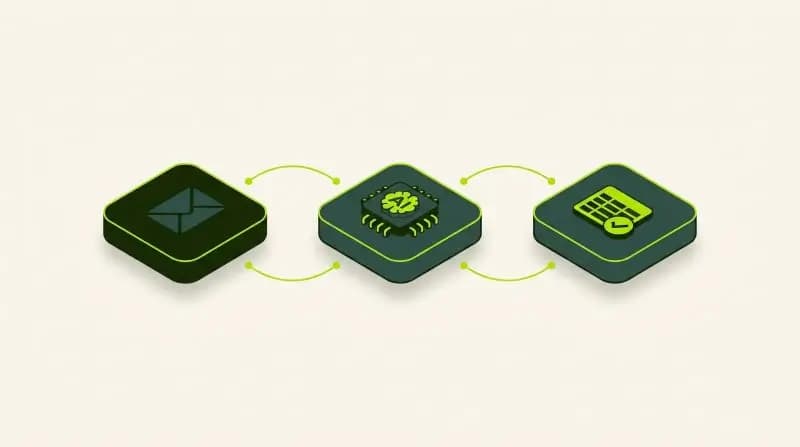
Learn to build AI workflows that handle your busywork — live sessions, real projects, zero code.
See the courseBeginner-friendly