.jpg&w=1080&q=75)
Data Sovereignty in the AI Age: Keeping Customer Context Local

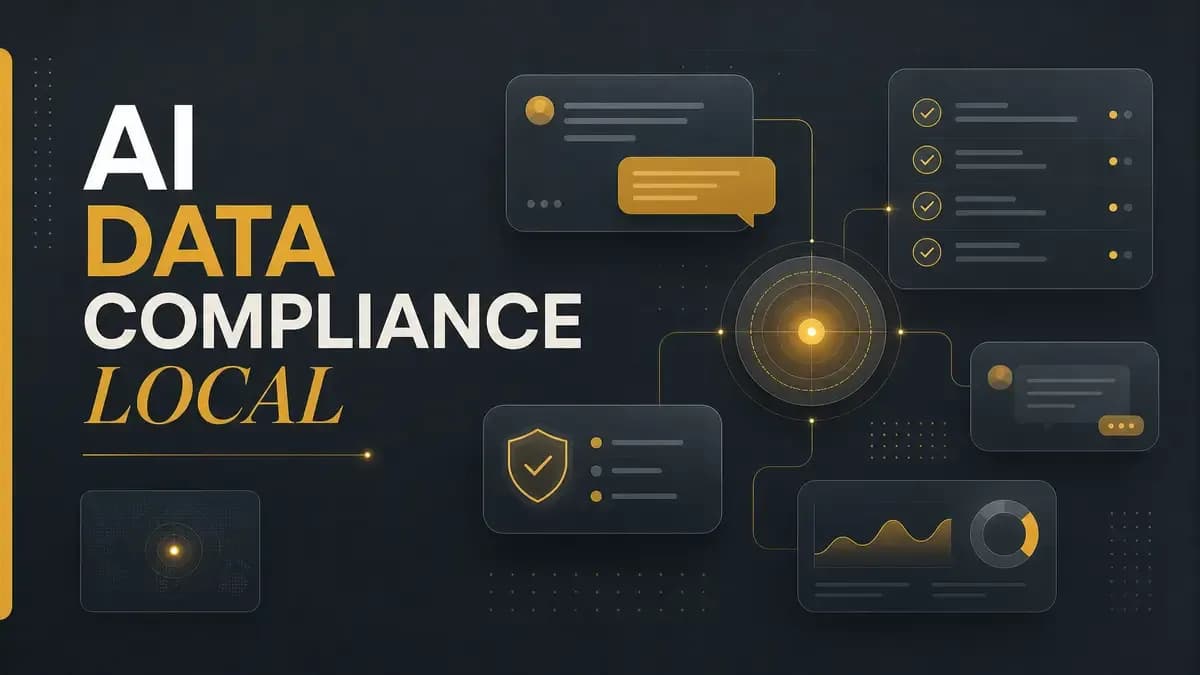
AI Data Compliance Local Models: How to Achieve True Data Sovereignty in 2026
Every time your AI agent processes a support ticket, drafts a financial summary, or reads a patient intake form — and routes that data through a third-party API — you are making a legal and ethical bet. You're betting that the vendor's data handling policies will never change, that their infrastructure won't be breached, and that your customers will never ask the uncomfortable question: "Where exactly did my data go?"
In 2026, that bet is getting harder to justify. Enterprise clients are asking tougher questions. Regulators are closing loopholes. And the good news? The open-source AI ecosystem has matured enough that you no longer have to send a single byte of customer data outside your own firewall to build powerful, production-grade AI workflows.
This is the era of data sovereignty — and here's how to build for it.
What Is AI Data Sovereignty (and Why Should You Care)?
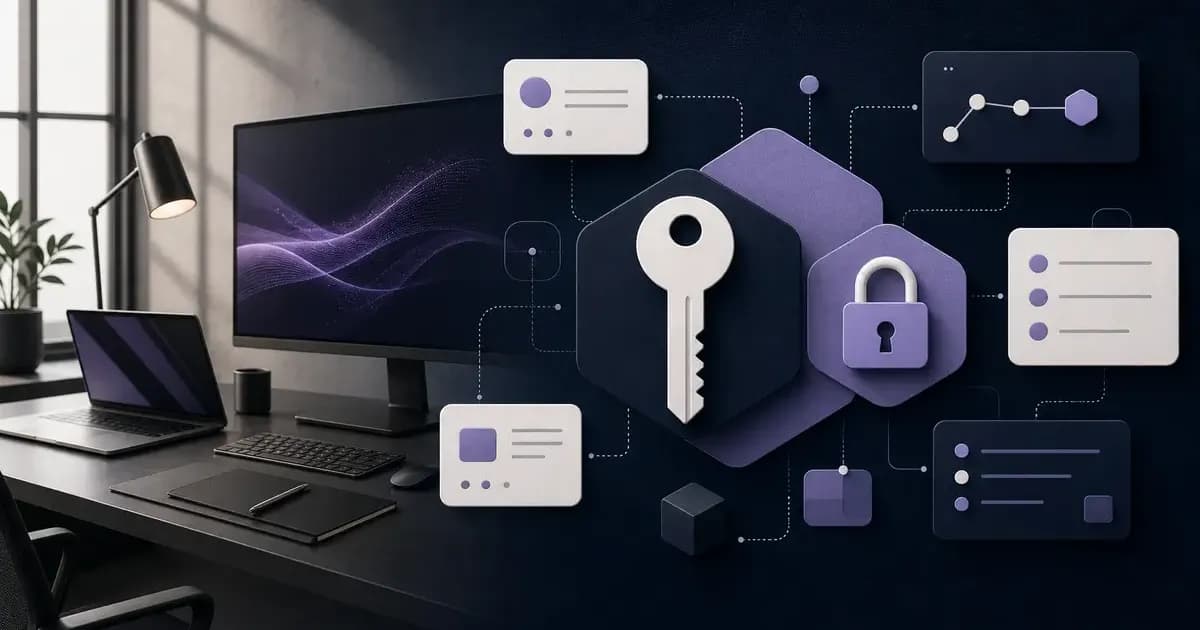
Data sovereignty means you own and control every layer of your AI stack. The model runs on your hardware. The context stays in your database. The orchestration logic lives in your codebase.
It's the opposite of the "API-first" approach where your customer's emails, financial records, and PII flow through a third-party's servers as a matter of course. When you send data to a cloud LLM provider, you are trusting:
• Their data retention and deletion policies
• Their security posture against breaches
• Their sub-processors and vendor chain
• The jurisdiction their servers operate in
For many use cases — especially in healthcare, finance, and legal services — that trust chain is simply too long.
The Regulatory Landscape Is Tightening
GDPR (EU): Article 28 requires a Data Processing Agreement (DPA) with every processor that touches personal data. Cloud LLM vendors qualify. If that vendor processes data outside the EU without adequate safeguards (like Standard Contractual Clauses), you may already be in violation.
HIPAA (US Healthcare): Sending Protected Health Information (PHI) to a third-party AI model without a signed Business Associate Agreement (BAA) is a HIPAA violation. Most LLM API providers do not offer BAAs for standard API access.
SOC 2 Type II: Your auditors increasingly want to know where AI processing occurs. "We send customer records to a public LLM API" is a finding that will slow — or kill — your enterprise sales cycle.
Running local AI models sidesteps most of these risks entirely. The data never leaves your environment, so the regulatory surface area shrinks dramatically.
The Local-First AI Stack: Core Components
Building a local AI stack isn't as complex as it sounds in 2026. The tooling has caught up. Here's the layered architecture you need:
Layer 1 — The Local Model (Ollama)
Ollama is the de-facto standard for running open-weight LLMs on your own hardware or private cloud VM. With a single command, you can pull and serve models like Llama 3.3, Mistral, Qwen2.5-Coder, and Gemma 3.
# Install and run Llama 3.3 locally
ollama pull llama3.3
ollama serve
Ollama exposes an OpenAI-compatible REST API at http://localhost:11434. This means any tool built for the OpenAI API can be pointed at your local instance with zero code changes — just swap the base URL.
You now have a fully private, infinitely scalable (within your hardware) inference endpoint. No usage logs sent to a vendor. No training on your prompts. No data leaving your network.
Layer 2 — The Local MCP Server
The Model Context Protocol (MCP) is the emerging standard for connecting AI agents to tools and data sources. Instead of hardcoding tool logic into your agent, MCP lets you expose capabilities — like querying a CRM, reading a database, or sending an internal notification — as standardized, discoverable tool endpoints.
Running a local MCP server means your agent's tool calls also stay inside your firewall. Here's a minimal Python MCP server exposing a customer lookup tool:
from mcp.server.fastmcp import FastMCP

mcp = FastMCP("local-crm-tools")

@mcp.tool()
def get_customer_record(customer_id: str) -> dict:
    """Retrieve a customer record from the local database."""
    # Query your internal DB — no external call made
    return db.query("SELECT * FROM customers WHERE id = ?", customer_id)

if __name__ == "__main__":
    mcp.run(transport="stdio")
This tool is invoked by the agent locally. The customer record — including PII — is retrieved from your internal database and passed only to your local LLM. At no point does that data touch the public internet.
Layer 3 — The Orchestration Agent
Now you wire it together. Your orchestration layer — whether it's a custom Python agent, a LangGraph workflow, or Zero To AI's HITL pipeline — connects the local LLM with the local MCP server.
from langchain_ollama import ChatOllama
from langchain_mcp_adapters.client import MultiServerMCPClient

# Point to local Ollama instance
llm = ChatOllama(model="llama3.3", base_url="http://localhost:11434")

# Connect to local MCP server
async with MultiServerMCPClient({"crm": {"command": "python", "args": ["mcp_server.py"]}}) as client:
    tools = await client.get_tools()
    agent = create_react_agent(llm, tools)
    result = await agent.ainvoke({"messages": [("user", query)]})
Every inference call, every tool invocation, every piece of customer context — entirely local.
Human-in-the-Loop: The Compliance Safety Net
Running local models solves the data egress problem. But it doesn't solve the decision quality problem.
Open-weight local models are extraordinarily capable in 2026, but they are not infallible — especially for high-stakes decisions involving financial data, medical summaries, or legal document review.
This is where Human-in-the-Loop (HITL) orchestration becomes your compliance superpower.
Zero To AI's local-first philosophy is built on a simple principle: your AI should ask before it acts on anything sensitive. Rather than letting an agent autonomously send a refund, update a medical record, or file a document, HITL workflows pause execution and route the proposed action to a human reviewer.
The benefits are threefold:
• Regulatory alignment: Many compliance frameworks (GDPR's right to meaningful human review, HIPAA's minimum necessary standard) effectively require a human checkpoint for consequential automated decisions.
• Error containment: A human gate catches model hallucinations before they cause real-world harm.
• Audit trail: Every approved or rejected action is logged with the reviewer's identity and timestamp — exactly what your SOC 2 auditors want to see.
With HITL baked into a local stack, you get the speed of AI with the accountability of human oversight — all without sending customer data anywhere it shouldn't go.
Practical Deployment Patterns for 2026
You don't need a data center to run a compliant local AI stack. Here are three deployment patterns that work today:
• On-prem server: A single Nvidia-equipped workstation running Ollama can handle dozens of concurrent inference requests. Ideal for small teams with strict on-premise requirements (finance, healthcare).
• Private VPC on cloud: Deploy Ollama inside an AWS, Azure, or GCP private VPC with no public internet egress. You get cloud scalability with full network isolation. Compliant with most GDPR transfer mechanisms since you control the VPC.
• Air-gapped environments: For defence, government, or ultra-sensitive legal work, Ollama models can be downloaded once and run completely offline. No network access required after initial setup.
Choosing the Right Local Model for Compliance Use Cases
Not all open-weight models are created equal for compliance-sensitive tasks:
• Instruction following & summarization: Llama 3.3 70B or Mistral Large
• Document classification & extraction: Qwen2.5 72B or Gemma 3 27B
• Code generation for automation: Qwen2.5-Coder 32B or DeepSeek-Coder V3
• Multilingual GDPR contexts: Mistral NeMo or Llama 3.3 70B with language-specific prompting
Run benchmark evals on your own data before committing to a model for production. Local deployment means you can iterate freely without per-token cost concerns.
Zero To AI's Local-First Philosophy
At Zero To AI, we believe AI automation should empower businesses without creating compliance landmines. That means:
1. Data stays where it belongs — in your systems, under your control.
2. Humans stay in the loop — for any decision that carries real-world consequences.
3. The stack is transparent — every tool call, every model inference, every human approval is logged and auditable.
Our workflows are designed from the ground up to run against local Ollama endpoints and local MCP servers. When you build with Zero To AI, you're not locked into a cloud vendor's data handling policies. You're building on infrastructure you own.
Enterprise clients increasingly demand it. Regulators increasingly require it. And the tooling in 2026 makes it entirely achievable without sacrificing capability.
Learn to build AI workflows that handle your busywork — live sessions, real projects, zero code.
See the courseBeginner-friendly