
.jpg&w=1080&q=75)
AI Governance in 2026: How to Build a Shadow AI Policy Before Its Too Late

AI Governance in 2026: How to Build a Shadow AI Policy Before Its Too Late
By the time your legal team hears about the ChatGPT incident, the damage is already done.
In 2026,shadow AI— employees using unauthorized AI tools with company data — has become the #1 unmanaged risk for enterprise security teams. A recent Abbyy survey found that 43% of enterprise employees regularly use non-approved AI tools for work tasks, with only 11% of their organizations having any formal policy in place to govern the behavior.
If your company doesnt have anAI governance policy, your employees are already writing it for you — one unsanctioned API call at a time.
What Is Shadow AI (and Why Is It Spreading)?
Shadow AI isnt a new phenomenon — its the 2026 evolution of shadow IT. Just as employees once brought their own Dropbox accounts and personal smartphones to work, they are now routing sensitive company data through personal ChatGPT subscriptions, running code through free Gemini tiers, and using consumer-grade AI tools to summarize confidential legal documents.
The drivers are obvious: AI tools are dramatically better than non-AI alternatives, the best ones are consumer-accessible, and the productivity gains are real. A sales rep who discovers that Claude can write their prospecting emails 10x faster isnt waiting for IT approval. Theyre just doing it.
The risk, however, is equally real:
- Data Exfiltration: Prompts sent to consumer AI tools may be used for model training, exposing proprietary strategies, client data, or trade secrets.
- GDPR & Compliance Violations: Sending personal data to unauthorized third-party processors is a regulatory breach in most jurisdictions.
- Legal Liability: AI-generated outputs (contracts, advice, code) used without human review can create liability if they contain errors.
- Model Inconsistency: When 50 employees use 15 different AI tools, your organizations outputs become unpredictable and unauditable.
The Uncomfortable Truth:Most enterprises already have a shadow AI problem. The only question is whether you know about it.
Step 1 — The Shadow AI Audit: Know What Youre Dealing With
Before writing a policy, you need a baseline. The Shadow AI Audit is a structured 48-hour exercise any CIO or CHRO can run:
- Survey Your Team: Ask three questions anonymously: Do you use any AI tools for work? Which ones? For what tasks? The results will surprise you.
- Audit Your Network Traffic: Work with IT to identify API calls to known AI providers (OpenAI, Anthropic, Google AI, Cohere) from corporate devices.
- Review Expense Reports: Personal subscriptions to AI tools often appear as small recurring charges. A $20/month ChatGPT Plus subscription expensed by 50 employees is a $12,000/year shadow AI program you didnt sanction.
- Interview Team Leads: Most shadow AI adoption is driven by early adopters within specific teams. These people arent your enemies — theyre your most valuable AI champions. Talk to them.
The output of your audit is aShadow AI Heat Map: a clear picture of which tools are being used, by which teams, for what tasks, and with what data.
Step 2 — Classify, Dont Prohibit
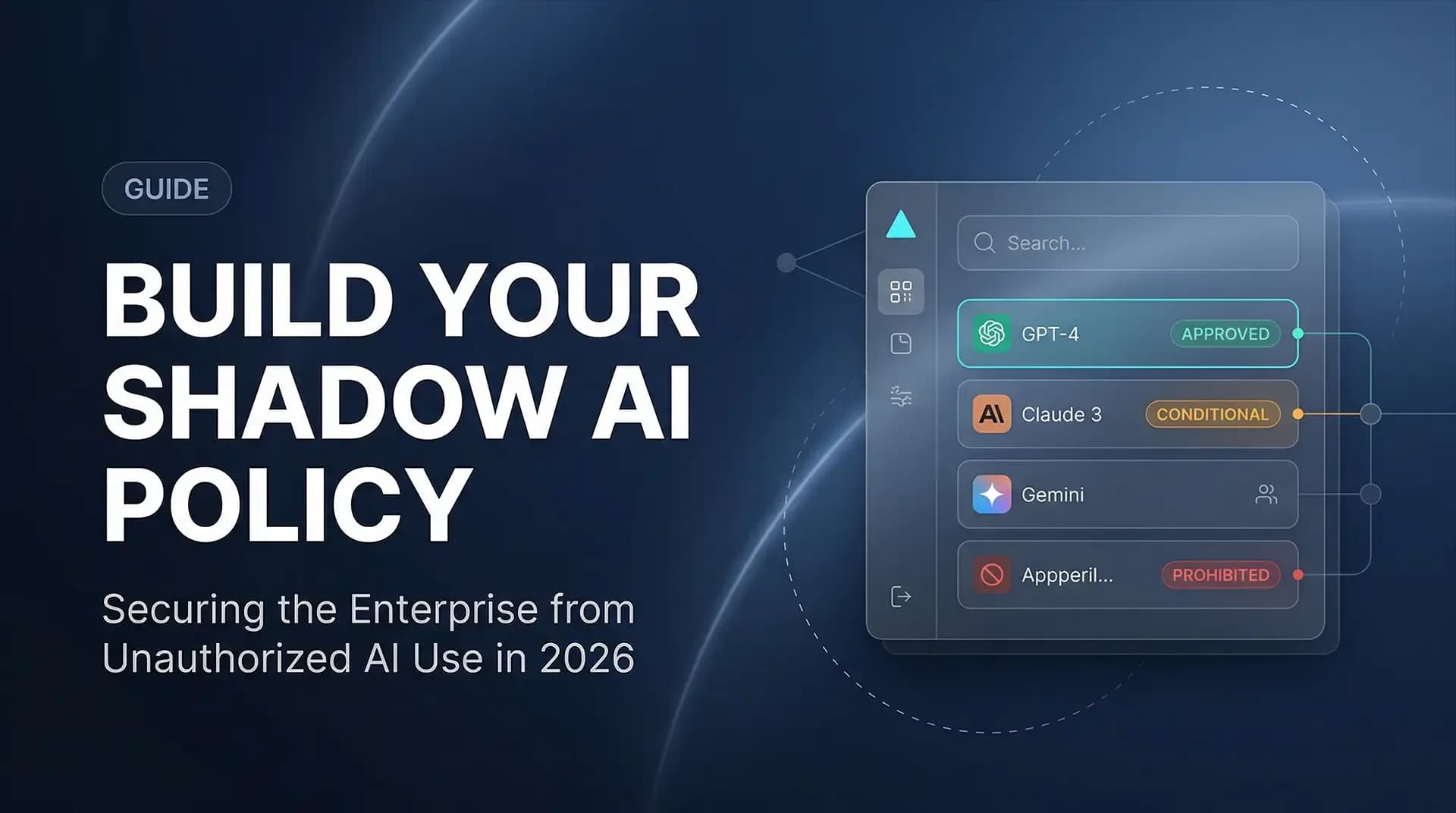
The most common mistake in AI governance is leading with prohibition. No AI tools without IT approval is a policy that will be universally ignored and actively resented. Instead, build aclassification framework:
Tier 1 — Open Use (Approved)
Tools that have been vetted for security, compliance, and data handling. Employees can use these freely. Examples: organization-licensed Microsoft Copilot, approved Claude for Work, internal AI tools built on private infrastructure.
Tier 2 — Conditional Use (With Guardrails)
Tools that are permitted for specific use cases with restrictions. Example: ChatGPT is approved for drafting external content but not for processing client data or internal financial information.
Tier 3 — Prohibited Use
Consumer AI tools used with data classified as confidential, sensitive, or personally identifiable. This tier must be clearly defined, not left to interpretation.
The power of this framework is that it says yes more often than no — which is the only way to get employee buy-in and voluntary compliance.
Step 3 — Write the Policy (The 5 Non-Negotiables)
An effective AI acceptable use policy doesnt need to be 50 pages. It needs five core elements:
- Scope: Which AI tools and which employees does this policy cover?
- Data Classification Rules: Which business data can and cannot be processed by which tier of tool?
- Output Review Requirements: Any AI-generated output used in a client-facing, legal, or financial context must be reviewed and approved by a human with domain expertise.
- Reporting Obligations: Employees who discover an unauthorized AI use (by themselves or a colleague) have a clear, non-punitive path to report it.
- Consequence Framework: Not punitive — educational for first offenses, escalating for repeated violations.
Critically, the policy must include aSunset Clause: a scheduled review every 6 months. AI evolves too fast for a static policy to remain useful. A policy written in January 2026 may already be obsolete by July.
Step 4 — Build the Authorized Stack
Governance without alternatives is futile. Once youve identified what employees are doing with shadow AI, your job is to give them a sanctioned way to do it just as well.
This typically requires:
- Anenterprise AI licensefor at least one frontier model (Claude for Work, Copilot, or equivalent) with data processing agreements in place.
- Aninternal AI tool directory: a living list of approved tools, their tiers, and approved use cases that is searchable and accessible to all employees.
- AnAI Champions Program: identify power users in each team and give them a formal role to help colleagues adopt approved tools. This converts your shadow AI risk into a structured adoption asset.
Conclusion: Governance That Enables, Not Suffocates
The goal of an AI governance framework isnt to stop your employees from using AI. Its to ensure they use it in ways that protect the company, comply with regulations, and compound over time rather than introducing liability.
Done right, your AI governance policy becomes a competitive advantage. Companies with clear, employee-friendly AI frameworks will attract better talent, move faster to production AI adoption, and avoid the costly regulatory and PR fallout that comes from a well-publicized AI data breach.
Start this week. Run the audit. Classify your tools. Write the 5 non-negotiables.

Learn to build AI workflows that handle your busywork — live sessions, real projects, zero code.
See the courseBeginner-friendly