.jpg&w=1080&q=75)
The "Load-Bearing Infrastructure" Approach: Stop Adding Tools, Start Building Systems

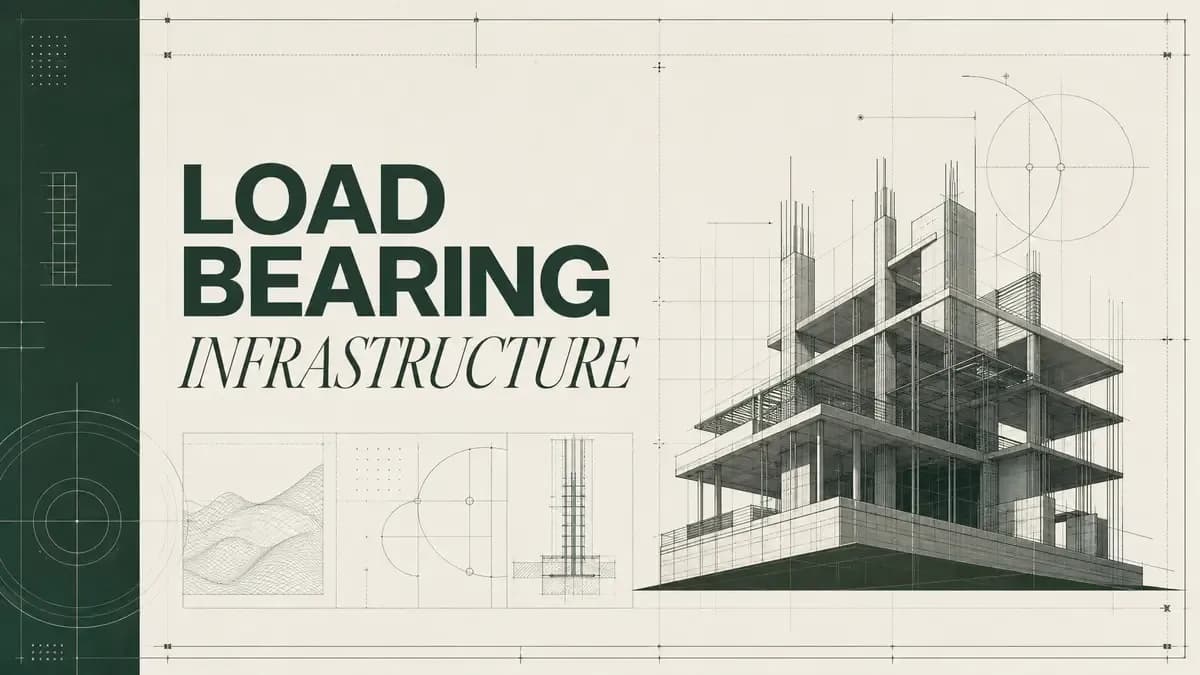
The "Load-Bearing Infrastructure" Approach to AI System Design for Solopreneurs
There's a renovation metaphor that every solopreneur building with AI needs to hear.
When you're renovating a house, you have two types of walls. Partition walls — the ones you can knock down without consequence. And load-bearing walls — the ones holding the entire structure up. Tear out a load-bearing wall without knowing what you're doing, and the ceiling comes down.
Your AI stack works exactly the same way. Most of the tools you're using are partition walls. A handful are structural. And right now, you probably can't tell which is which.
That's the problem this post is here to fix.
The Real Cost of Tool Sprawl (It's Not Just the Subscriptions)
Every solopreneur who's been building with AI for more than six months has a graveyard. A list of tools they signed up for, used intensely for two weeks, and abandoned. Notion AI. That automated LinkedIn scraper. The AI email assistant that wasn't quite right. The Zapier alternative that promised to be smarter.
The subscription costs are annoying. But they're not the real problem.
The real cost is cognitive overhead.
Every tool in your stack demands a slice of your mental RAM. You have to remember it exists. You have to check whether it's still working. You have to decide, on any given task, whether it's the right tool to reach for. And when you have 15 tools competing for your attention, you end up doing the worst possible thing: making micro-decisions all day instead of doing actual work.
There's also integration debt — the compounding cost of keeping loosely connected apps talking to each other. One API changes. One webhook breaks. One workflow silently fails for three days before you notice. You're not building a business anymore; you're maintaining a technology house of cards.
The math is brutal. If each tool in a 15-tool stack costs you just 30 minutes per week in maintenance, context-switching, and troubleshooting, that's 7.5 hours gone. Every single week. For a solopreneur, that's nearly an entire workday lost to stack management.
This is the shiny object trap. And it's specifically dangerous in AI tooling, because the space moves fast, the demos are always impressive, and the FOMO is constant.
Defining Load-Bearing Infrastructure: What It Actually Means
Here's the concept you need to build around.
Load-bearing infrastructure is the small set of deeply integrated systems that invisibly handle the majority of your operational overhead — without requiring your daily attention.
The keyword is invisibly. A load-bearing tool doesn't feel like work. You don't think about it the way you think about a task. It runs in the background, processes information, routes outputs, and surfaces results. It's the structural wall, not the decorative shelf.
Just like in construction, you can have a beautiful, spacious room with very few load-bearing walls — if those walls are positioned correctly and built to spec. The same principle applies to your AI stack.
Fewer, deeper-integrated tools don't just reduce cost. They reduce the cognitive surface area of your entire operation. And for a solopreneur, cognitive surface area is your scarcest resource.
The 3 Criteria for a Load-Bearing AI Tool
Not every tool that claims to save you time actually earns a structural role in your stack. Here's the filter we use at Zero To AI — a simple three-part test.
Criterion 1: It Saves You 5+ Hours Per Week
This is the baseline. Not 30 minutes. Not "a couple of hours." Five or more hours, every week, consistently. If you can't point to a measurable block of time this tool returns to you on a recurring basis, it's a partition wall at best.
Track this honestly. Don't estimate based on the best-case scenario demo you saw. Track it after 30 days of real use.
Criterion 2: It Integrates With Your Other Core Tools
A load-bearing tool doesn't exist in isolation. It passes data to and from the other structural systems in your stack. It fits into a flow.
If a tool requires you to manually export a CSV, paste it somewhere else, and then re-enter the output somewhere else again — it's not load-bearing. It's friction. True infrastructure connects natively, through APIs, webhooks, or direct integration — not copy-paste.
Criterion 3: It Runs Without Daily Maintenance
This is the acid test. Can you go on a four-day weekend and come back to find it still working? Not just running — working correctly, producing useful outputs, handling edge cases gracefully?
If a tool requires you to babysit it daily, it's not infrastructure. It's a part-time job. Load-bearing tools are the ones you configure well once, review weekly, and trust in between.
How to Audit Your Current Stack: The 20-Minute Exercise
Here's a practical exercise you can run today. Open a spreadsheet and list every tool currently active in your stack — every subscription, every app, every integration, every automation.
For each tool, answer three questions:
• Hours saved per week (honest estimate): Write a number. Not a range. A number.
• Does it connect natively to at least two other tools in my stack? Yes or No.
• Would I notice within 24 hours if it silently stopped working? Yes = it's critical. No = it might not matter.
Now sort by hours saved. Your top four or five tools are your load-bearing walls. Everything below a certain threshold — especially anything saving less than an hour per week — is almost certainly a partition wall. Candidate for removal.
Do the math on the partition walls. Add up their monthly cost. Add up the maintenance time they consume per week. The number you get is the tax you're paying for tool sprawl.
Most solopreneurs who do this exercise find they can eliminate 40–60% of their stack without losing any meaningful capability. What they gain is focus, clarity, and hours.
The Zero To AI Minimal Stack Philosophy
At Zero To AI, we operate from a core principle: 4 to 5 deeply wired tools will always outperform 15 loosely connected apps.
This isn't minimalism for its own sake. It's systems thinking. A smaller stack means:
• Every tool is chosen deliberately, not impulsively
• Every integration is intentional, not accidental
• Every workflow is understood end-to-end, not hoped-for
Our approach is built on Human-in-the-Loop (HITL) orchestration — meaning AI systems run autonomously within defined parameters, but humans remain in control at key decision points. That philosophy only works if the underlying stack is tight, integrated, and trustworthy. You can't run HITL on a house of cards.
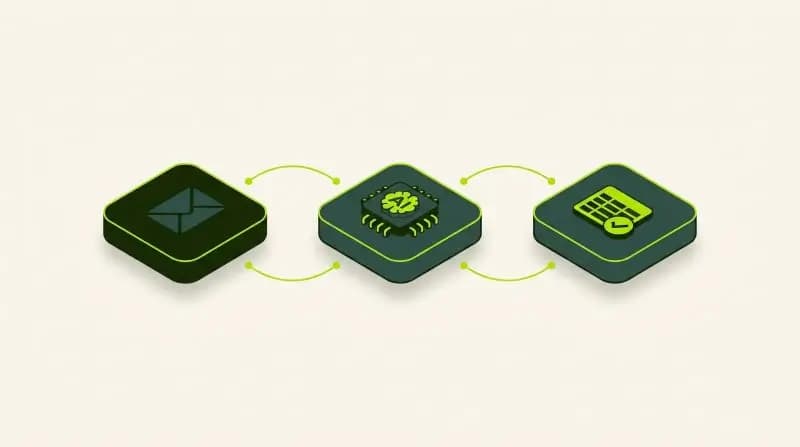
The Zero To AI minimal stack philosophy means your tools should form a closed loop — output from one feeds input to another, automatically, without manual intervention. Information flows. Decisions get surfaced. You step in where it matters. The system handles the rest.
What a Minimal Stack Looks Like in Practice
A genuinely load-bearing stack for a solopreneur might include:
• A core AI orchestration layer (the brain that coordinates everything)
• A CRM or customer data system (the record of truth for relationships)
• A content or communication tool (connected to the orchestration layer, not siloed)
• A project/task management system (with automation hooks, not just a list)
• A reporting or analytics layer (that pulls from all of the above automatically)
Five tools. All connected. All feeding each other. That's load-bearing infrastructure.
Shiny Object vs. Load-Bearing: The Contrast
Dimension | Shiny Object Approach | Load-Bearing Approach |
|---|---|---|
Selection Criteria | "It looks impressive in the demo" | "It saves 5+ hrs/week and integrates natively" |
Stack Size | 12–20 tools and growing | 4–6 tools, intentionally capped |
Integration Style | Manual exports, copy-paste, workarounds | Native APIs, webhooks, automatic data flow |
Maintenance Load | Daily check-ins, constant troubleshooting | Weekly review, mostly autonomous |
Cognitive Cost | High — always deciding which tool to use | Low — the system decides for you |
Failure Mode | Silent failures you discover days later | Visible alerts, integrated monitoring |
Cost Efficiency | High spend, unclear ROI | Lean spend, direct ROI traceable |
Scalability | Breaks under volume | Scales without adding headcount |
Closing: The Invisible System Is the Powerful One
Here's the counterintuitive truth about great infrastructure: you don't notice it when it's working.
The best AI system design for a solopreneur isn't the one with the most features or the flashiest interface. It's the one that disappears into the background of your operation and just works — week after week, handling the overhead so you can stay focused on what actually creates value.
That's the load-bearing infrastructure mindset. Build fewer walls. Build them right. Build them to hold weight.
Stop adding tools. Start building systems.
Ready to Build a Stack That Actually Holds?
At Zero To AI, we help solopreneurs and lean operators design AI systems that run — not just tools that impress. Our Human-in-the-Loop orchestration framework means you stay in control of the decisions that matter, while the infrastructure handles everything else.
Explore the Zero To AI system design framework →
Stop managing your stack. Start trusting your system.
Learn to build AI workflows that handle your busywork — live sessions, real projects, zero code.
See the courseBeginner-friendly