
.jpg&w=1080&q=75)
Multi-Model Routing: How to Use Cheap AI for Simple Tasks and Expensive AI for Hard Ones


Multi-Model Routing: How to Master AI Cost Optimization with Multi Model Routing AI Cost Strategies
You're building something real. You've integrated an LLM into your product, the demos are looking great — and then your first real API bill lands.
It's brutal.
You're paying GPT-5 or Claude Opus prices for tasks like "extract the city name from this address" or "is this sentence positive or negative?" That's the equivalent of hiring a neurosurgeon to change a lightbulb. And if you're processing thousands of requests a day, that waste compounds fast.
The fix? Multi-model routing. It's one of the highest-leverage architectural decisions any AI-powered team can make in 2026. Let's break it down.
The AI Cost Problem Nobody Talks About Enough
Most teams start the same way: pick the best model, call it for everything, ship fast. That's a perfectly reasonable early-stage decision. But it becomes a liability the moment you scale.
Frontier models like GPT-5, Claude Opus, and Gemini Ultra are priced at a premium because they're genuinely extraordinary — at complex, multi-step, nuanced tasks. But the uncomfortable truth is that the vast majority of LLM calls in production are not complex. Studies across production AI workloads consistently show that 60–75% of all LLM calls are simple classification, extraction, or retrieval tasks that a much smaller, cheaper model handles just as well.
When every API call hits your most expensive model, you're bleeding money. A startup processing 500,000 LLM calls per month at GPT-5 pricing can easily rack up a $15,000–$25,000 monthly bill — for work that a $0.002/1K token model could have handled just as well.
This is the core cost problem that multi-model routing solves.
What Is Multi-Model Routing, and How Does It Work?
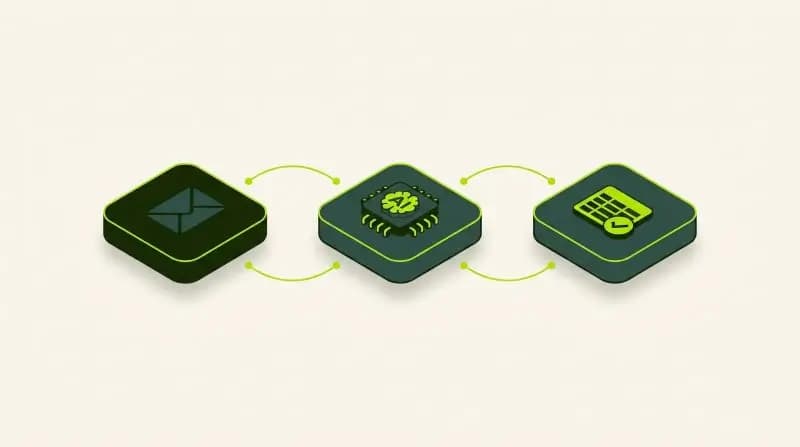
Multi-model routing is an architectural pattern where a lightweight routing layer sits in front of your model calls. Instead of blindly sending every task to one model, the router first classifies the task's complexity — then dispatches it to the cheapest model that can handle it reliably.
Think of it as a traffic controller for your AI pipeline. Simple tasks go to the fast lane. Complex tasks get the premium treatment they actually need.
The routing decision is typically made by:
1. A rule-based classifier — keyword patterns, token count thresholds, or predefined task types.
2. A lightweight LLM classifier — a tiny, cheap model whose only job is to read the task and output a tier label (tier_1, tier_2, or tier_3).
3. A hybrid approach — rules handle the obvious cases; the LLM classifier handles ambiguous ones.
The result is a system that's smarter about how it spends your AI budget, without sacrificing quality on the tasks that genuinely require it.
The Three-Tier Task Classification System
The most practical way to implement multi-model routing is to define three tiers of task complexity. Here's how we think about it at Zero To AI:
Tier 1 — Simple & Mechanical
These tasks have deterministic, narrow outputs. They don't require reasoning, creativity, or world knowledge. They just need a model that can follow a tight instruction reliably.
Examples: Entity extraction, sentiment classification, intent detection, language detection, simple yes/no filtering, keyword tagging.
Best models for Tier 1: Gemini Flash, Mistral 7B, Llama 3 8B, GPT-4o Mini
Tier 2 — Moderate Drafting & Summarization
These tasks involve producing coherent prose, condensing information, or drafting structured content. They need a stronger language model but not frontier-level reasoning power.
Examples: Summarizing documents, drafting email replies, generating product descriptions, FAQ generation, structured data extraction from messy text.
Best models for Tier 2: Gemini 1.5 Pro, Claude Haiku, Mistral Medium, GPT-4o
Tier 3 — Complex Reasoning & Generation
These tasks require deep reasoning, multi-step problem solving, code generation, or nuanced judgment calls. This is where you actually need the frontier model.
Examples: Debugging complex code, multi-document synthesis, strategic recommendations, long-form content with strong reasoning, agent-based planning.
Best models for Tier 3: GPT-5, Claude Opus, Gemini Ultra
Model Tier Comparison: Cost, Speed, and Use Cases
Tier | Task Type | Example Models | Approx. Cost (per 1M tokens) | Best For |
|---|---|---|---|---|
Tier 1 | Simple extraction & classification | Gemini Flash, Mistral 7B, GPT-4o Mini | $0.10 – $0.30 | Entity tagging, sentiment, intent |
Tier 2 | Drafting, summarization, structured gen | Gemini 1.5 Pro, Claude Haiku, GPT-4o | $1.00 – $5.00 | Summaries, drafts, data extraction |
Tier 3 | Complex reasoning & coding | GPT-5, Claude Opus, Gemini Ultra | $10.00 – $30.00+ | Code, multi-step reasoning, planning |
Key insight: A well-routed system routes ~60% of calls to Tier 1, ~30% to Tier 2, and only ~10% to Tier 3. That alone can cut your AI bill by 70–80%.
How to Build a Routing Agent: Python Pseudocode
Here's a simplified but realistic example of what a routing layer looks like in practice. This uses a lightweight classifier prompt to assign tier labels before dispatching to the appropriate model.
import openai  # or your preferred SDK
from enum import Enum

class ModelTier(Enum):
    TIER_1 = "tier_1"  # Simple / fast / cheap
    TIER_2 = "tier_2"  # Moderate complexity
    TIER_3 = "tier_3"  # Complex / expensive

# Model mappings per tier
TIER_MODELS = {
    ModelTier.TIER_1: "gemini-flash",       # ~$0.10/1M tokens
    ModelTier.TIER_2: "gemini-1.5-pro",     # ~$3.50/1M tokens
    ModelTier.TIER_3: "gpt-5",              # ~$20.00/1M tokens
}

ROUTER_SYSTEM_PROMPT = """
You are a task complexity classifier. Given a user task, respond with ONLY one of:
- tier_1: Simple extraction, classification, yes/no, tagging
- tier_2: Summarization, drafting, structured generation
- tier_3: Complex reasoning, multi-step logic, code generation

Task: {task}
"""

def classify_task(task: str) -> ModelTier:
    """Use a cheap model to classify task complexity."""
    response = call_llm(
        model="gemini-flash",  # Always use cheapest model for routing
        prompt=ROUTER_SYSTEM_PROMPT.format(task=task),
        max_tokens=10
    )
    tier_label = response.strip().lower()
    return ModelTier(tier_label)

def route_and_execute(task: str, human_override: ModelTier = None) -> str:
    """
    Route task to appropriate model tier.
    Supports HITL override for sensitive or high-stakes tasks.
    """
    # 1. Classify the task
    tier = classify_task(task)

    # 2. Human-in-the-Loop: allow override for sensitive tasks
    if human_override:
        print(f"[HITL] Human overriding tier {tier.value} → {human_override.value}")
        tier = human_override

    # 3. Select model for tier
    selected_model = TIER_MODELS[tier]
    print(f"[ROUTER] Task routed to: {selected_model} (Tier: {tier.value})")

    # 4. Execute the actual task
    result = call_llm(model=selected_model, prompt=task)
    return result

# Example usage
response = route_and_execute(
    task="Extract the company name and founding year from this bio: ...",
)
# → Routes to Tier 1 (Gemini Flash) — fast and cheap ✓

response = route_and_execute(
    task="Write a detailed technical proposal for migrating our monolith to microservices.",
    human_override=ModelTier.TIER_3  # HITL override for high-stakes output
)
# → Human overrides to Tier 3 (GPT-5) — worth the cost here ✓
This is a simplified illustration — in production you'd add caching, logging, fallback logic, and more sophisticated classification. But the core pattern is exactly this.
Real Savings: What This Looks Like in Practice
Let's put real numbers on this. Say you're a startup running 500,000 LLM calls per month.
Before routing (everything to GPT-5):
• 500,000 calls × avg 500 tokens × $20/1M tokens ≈ $5,000/month
After routing (60/30/10 split):
• 300,000 Tier 1 calls (Gemini Flash): ~$30
• 150,000 Tier 2 calls (Gemini 1.5 Pro): ~$262
• 50,000 Tier 3 calls (GPT-5): ~$500
• Total: ~$792/month
That's a ~84% reduction in your AI API spend — with zero degradation in output quality for the tasks that don't require frontier-level intelligence.
For a startup burning runway, that's the difference between 6 months and 18 months of AI budget.
The Zero To AI Angle: Why Human-in-the-Loop Routing Matters
Automated routing is powerful. But it's not infallible.
A routing classifier can misfire. A Tier 1 call might actually require nuanced judgment. A Tier 2 task might be going to a customer facing a compliance-sensitive situation. When the stakes are high, you don't want to trust a probability score alone.
This is where Human-in-the-Loop (HITL) orchestration — Zero To AI's core philosophy — transforms routing from a cost tool into a governance tool.
With HITL routing, your team can:
• Review and override routing decisions for flagged task types (legal, medical, financial).
• Audit routing logs to identify systematic misclassifications and retrain the router.
• Escalate dynamically — let users or internal reviewers bump a task to a higher tier when they know it needs it.
The result isn't just cheaper AI — it's AI that your team actually trusts, because humans remain in the decision loop where it counts. That's the Zero To AI way.
Start Routing Smarter with Zero To AI
Multi-model routing isn't a future optimization. It's a present-day necessity for any AI-powered product that's serious about scalability and unit economics.
Zero To AI helps you build AI pipelines with built-in Human-in-the-Loop orchestration — so you can automate intelligently, override intentionally, and scale without burning your budget.
Whether you're architecting your first LLM product or refactoring a costly production system, Zero To AI gives you the tools and frameworks to route, review, and run AI at the right cost for every task.
Learn to build AI workflows that handle your busywork — live sessions, real projects, zero code.
See the courseBeginner-friendly