.jpg&w=1080&q=75)
The Solopreneur Guide to Agentic Customer Support: Handle 100 Tickets Without Hiring

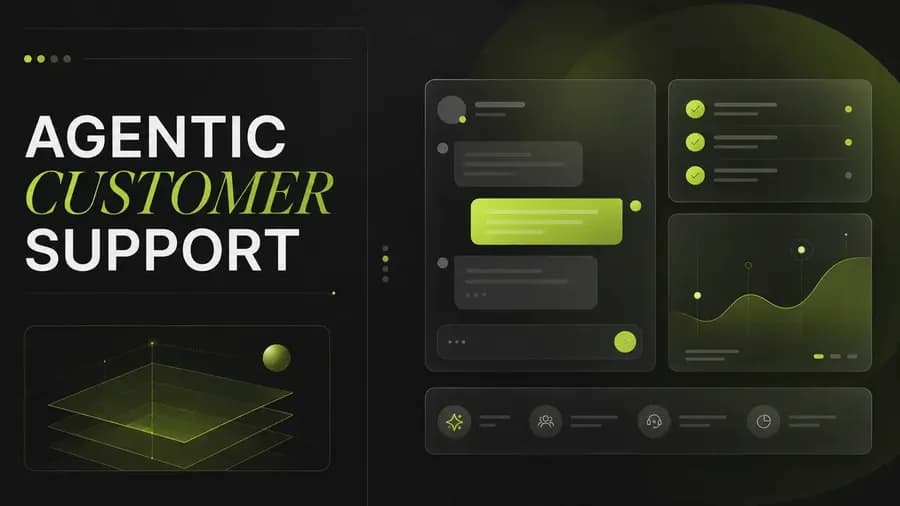
The Solopreneur Guide to Agentic Customer Support Automation: Handle 100 Tickets Without Hiring
You launched your SaaS. People signed up. Now your inbox looks like a scene from a disaster movie.
Fifty tickets at 8 AM. Twenty more by lunch. A billing question, three bug reports, and one very angry customer who signed every message in all-caps. If you're a solopreneur or a tiny team, this is the moment that breaks your flow, your focus, and sometimes your spirit.
Hiring a support team isn't in the budget yet. Ignoring tickets will tank your churn rate. So what do you do?
You build an agentic customer support automation pipeline — one that triages every ticket, drafts a reply in your brand voice, and only pings you when your human judgment is actually needed. That's exactly what we're going to walk through today.
Why Support Tickets Are the Silent Productivity Killer for Solopreneurs
Let's be honest about the math. A typical support ticket takes 5–10 minutes to read, categorize, look up the answer, write a reply, and send. Handle 60 tickets a day and you've burned 5–10 hours — before you've written a single line of code or worked on growth.
The problem isn't that support is unimportant. It's that the mechanics of support — classifying, routing, finding the right answer — are largely repetitive and rule-based. That's exactly the kind of work that AI agents are built for.
The goal isn't to remove humans from the loop entirely. It's to remove humans from the boring, predictable parts of the loop, so they can focus their attention where it actually matters: complex edge cases, angry customers who need empathy, and situations with legal or business risk.
This is the core philosophy behind Human-in-the-Loop (HITL) orchestration — and it's what makes agentic pipelines genuinely useful instead of just clever demos.
The 3-Stage Agentic Support Pipeline (Built on n8n)
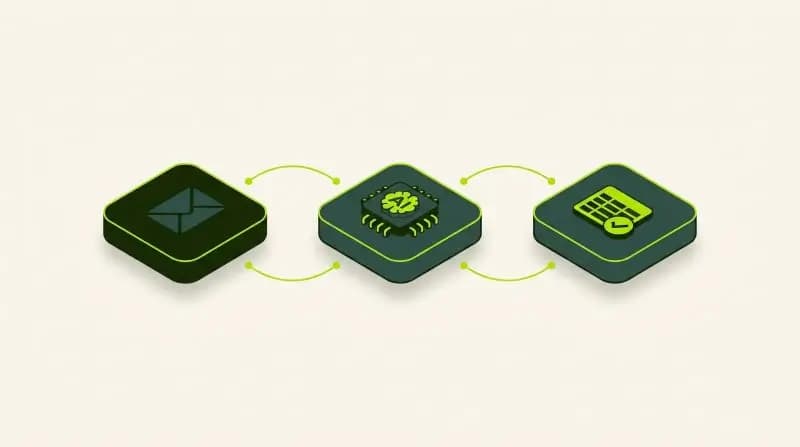
Before we dive into each stage, here's the full pipeline at a glance:
[New Ticket / Email / Form Submission]
          |
          v
+---------------------------+
| STAGE 1: INTAKE &         |
| CLASSIFICATION            |
| (n8n Webhook → LLM)       |
| Output: Category Tag      |
+---------------------------+
          |
          v
+---------------------------+
| STAGE 2: AUTOMATED        |
| RESPONSE DRAFTING         |
| (LLM + FAQ Knowledge Base)|
| Output: Draft Reply       |
+---------------------------+
          |
    ------+------
    |           |
    v           v
[Standard]  [Escalation Trigger]
    |        (Angry / Legal / Billing)
    v           |
+------------+  v
| STAGE 3:   | [INSTANT HUMAN PING]
| HITL QUEUE | (Slack / Email Alert)
| (Review,   |
|  Approve,  |
|  or Edit)  |
+------------+
    |
    v
[Reply Sent to Customer]
Now let's build it, stage by stage.
Stage 1 — Intake & Classification: Let the Agent Sort Your Inbox
Every ticket enters through a webhook trigger in n8n. Whether it comes from a Typeform, a Zendesk integration, a Gmail label, or a plain HTTP POST from your app's support form — n8n catches it and kicks off the workflow.
The raw ticket content is immediately passed to an LLM node (OpenAI GPT-4o, Claude, or Gemini — your choice). The prompt instructs the model to classify the ticket into one of five categories:
1. Billing — payment failures, refund requests, plan questions
2. Bug — something in the product is broken or not working as expected
3. How-To — user can't figure out how to do something (a product education issue)
4. Angry Customer — tone signals frustration, threats to cancel, or emotional escalation
5. Other — anything that doesn't fit the above
The classification output — a simple JSON object with a category field and a confidence_score — is stored in n8n's workflow data and passed to the next stage. Low-confidence classifications (under 70%) are automatically flagged for human review before drafting begins.
Building this in n8n:
1. Add a Webhook node as the trigger
2. Add an OpenAI node (or HTTP Request node for other providers) with your classification prompt
3. Add a Switch node to route based on the category output
4. Connect escalation categories (Angry Customer + Billing with certain keywords) to an immediate Slack notification node
Stage 2 — Automated Response Drafting: Your AI That Knows Your Product
This is where the magic happens — and where most teams get it wrong by skipping a critical ingredient: the FAQ knowledge base.
Your LLM is only as helpful as the context you give it. Without a knowledge base, it'll hallucinate answers, cite features that don't exist, or give generic non-answers that make customers even more frustrated.
How to build your FAQ knowledge base:
• Export your existing help docs, onboarding emails, and Notion pages as plain-text or markdown files
• Store them in a vector database (Pinecone, Qdrant, or Supabase's pgvector extension all work well with n8n)
• Use an embedding node in n8n to retrieve the top 3–5 most relevant chunks based on the ticket content
Once the relevant context is retrieved, a second LLM call drafts the actual reply. Your system prompt should include:
• Your brand voice guidelines (e.g., "Friendly but concise. Use 'you' and 'we'. Never say 'per your request'.")
• The customer's name and ticket history (if available)
• The retrieved FAQ context
• The ticket classification and original message
The output is a complete draft reply — not a template with blanks to fill in, but a personalized, context-aware response ready for human review.
The draft is saved to a review queue. In n8n, this could be a Google Sheet, an Airtable base, a Notion database, or a custom internal dashboard. Each row contains: ticket ID, customer email, classification, draft reply, confidence score, and a timestamp.
Stage 3 — HITL Review & Send: Human Judgment, Exactly When It's Needed
This is where the Human-in-the-Loop philosophy earns its keep.
For standard tickets (How-To, Bug, Other), the draft sits in the review queue and waits for you to approve it. You open your dashboard (or a Slack message with inline buttons), read the draft in 15 seconds, and either:
• Click "Approve" → n8n sends the reply via your email provider or helpdesk API
• Edit and Re-queue → you tweak the draft and re-submit; the revised version goes out
• Reject and Reassign → you flag it as needing deeper investigation and add a note
For escalation triggers, the process is different. If the LLM classifies a ticket as "Angry Customer" or detects legal keywords (refund disputes, threats, "my lawyer," GDPR requests), n8n fires an immediate Slack ping to your designated escalation channel — bypassing the draft queue entirely. You're in the conversation before the AI drafts anything.
This is the right call. Empathy doesn't scale well through automation. An angry customer needs to hear from a real person, fast. The agent's job is to make sure you never miss that moment.
Step-by-step HITL flow in n8n:
1. Draft is created in Stage 2 → saved to Google Sheets via Google Sheets node
2. n8n posts a Slack message with ticket summary + "Approve / Edit / Reject" buttons (using Slack Block Kit)
3. Slack button click triggers a Webhook callback back into n8n
4. n8n reads the decision: if Approved, Gmail / SendGrid / Intercom node fires the reply; if Edited, the modified text replaces the draft and sends; if Rejected, a note is added and the ticket is tagged for manual follow-up
5. All outcomes are logged back to your review queue for quality tracking
How to Track Response Quality Over Time
An agentic pipeline that you can't measure is a pipeline you can't improve.
Add a simple quality-tracking layer to your Google Sheet or Airtable base. For every ticket resolved, log: response time (ticket received → reply sent), approval rate (what % of drafts went out unedited), edit rate (what % needed changes), escalation rate (what % went to HITL immediately), and customer satisfaction (use a one-click CSAT link in your reply footer).
Review these metrics weekly. A rising edit rate tells you your knowledge base needs updating. A high escalation rate in the "Billing" category might mean your pricing page is confusing customers before they even sign up.
Over time, your pipeline learns — not through model fine-tuning (though that's possible), but through your own feedback loop. Better FAQ docs lead to better drafts. Better drafts lead to higher approval rates. Higher approval rates mean less time in the queue and faster responses for your customers.
Ready to Stop Drowning in Support Tickets?
Building this pipeline from scratch takes time — but you don't have to figure it out alone.
Zero To AI helps solopreneurs and early-stage SaaS founders build exactly this kind of Human-in-the-Loop AI infrastructure. We provide the workflows, the prompts, the knowledge base templates, and the guidance to get your agentic support system running in days, not months.
👉 Join Zero To AI today and get access to our full n8n workflow template for agentic customer support — including the classification prompts, HITL Slack integration, and quality-tracking dashboard.
Stop answering the same questions manually. Start building systems that scale.
Learn to build AI workflows that handle your busywork — live sessions, real projects, zero code.
See the courseBeginner-friendly