
AI Course for Non-Technical Background: How to Choose Without Wasting Money

The right AI course for a non-technical background needs no coding, takes a few hours rather than months, states its certificate cost upfront, and ends with something you can use at work. Check six things before paying: prerequisites, hours, certificate terms, language, price in rupees, and what you will build.
Plenty of "beginner" courses quietly assume you can write Python, which is a problem for anyone with a non-technical background. Others are free to watch but charge for the certificate. A few list prices only in dollars. None of this is hidden, but you have to look for it. This guide gives you six checks you can run in ten minutes, with real examples I opened on 1 November 2026. If you want a ranked list afterwards, our best AI courses without coding in India post covers that.
The six checks before you pay for an AI course for a non-technical background
- Prerequisites. Does the course say "no prior experience", or does it mention Python, math or "basic programming"? Read the fine print on the page, not the headline.
- Hours. A beginner course that needs 3 to 8 hours is a weekend. One that needs 40 hours is a commitment. Match it to your real free time.
- Certificate terms. Is learning free but the certificate paid? What exactly does the certificate certify?
- Language. Is the course taught in English, Hindi or another language you actually think in? Subtitles are not the same as teaching in your language.
- Price in rupees. If the page shows only dollars, you do not yet know your cost. Check the checkout screen.
- Outcome. Will you finish with something usable, such as a workflow, a document or an automation, or only a badge?
Real examples, checked on 1 November 2026
I opened each course page myself. Prices and terms change, so confirm on the provider's page before paying.
Course | Prerequisites | Hours | Cost (as shown) | Certificate | Language |
|---|---|---|---|---|---|
Google AI Essentials (Coursera) | "Zero experience required" per its FAQ | Page says 4 hours; five courses add up to about 8 | "$49 per month after the initial 7-day free trial period" in the US and Canada; no INR shown | Shareable certificate | English (the page also says "17 languages available", but its FAQ says English for now) |
AI For Everyone (DeepLearning.AI, Coursera) | "No prior experience required" | 7 hours | No price shown on the page | Needs the Certificate option at enrolment | English, with "27 languages available" |
Introduction to AI (Great Learning) | None stated | 3.0 hours listed, about 3.75 in its FAQ | Free | "Certificate of completion, not a professional certification"; unclear if paid | Not stated |
Elements of AI (Univ. of Helsinki, MinnaLearn) | Part 1 needs no programming; Part 2 recommends basic Python | Not stated | Free | Not stated | Hindi is not among its localised country sites |
IIT Madras AI for All (Hindi) | No prior AI or coding knowledge | 25 to 45 hours per course | Free to learn | Optional paid proctored exam, fee not stated | Hindi (registration closed 26 Jan 2026) |
A few things stand out. Two popular "beginner" options recommend or require Python in some part. The Coursera pages I opened show no rupee price, so ₹ cost is unknown until checkout. And "free" usually means free to learn, not free to certify.
The Python trap
Microsoft Learn's path "Get started with AI applications and agents on Azure" is labelled Beginner, and its page was updated on 28 October 2026. Its prerequisites say you "should already have a basic understanding of computing concepts and Python", and its roles are AI Engineer and Developer. That is a beginner course for a developer, not for a shopkeeper, teacher or marketing manager.
Elements of AI is friendlier. Part 1 says "no complicated math or programming required". Part 2, "Building AI", recommends some basic Python. If you are not a coder, stop after Part 1 or choose a different path.
This is why "beginner" on its own tells you very little. Always ask: beginner at what? Beginner in AI is different from beginner in coding.
How to read a certificate honestly
Certificates split into three kinds, and only one of them is worth paying for in most cases.
- Free completion note. Great Learning's introductory course describes its certificate as a "certificate of completion, not a professional certification". That is fine for proving you studied, but do not expect it to open doors.
- Platform certificate. Coursera's Google AI Essentials and AI For Everyone give a shareable certificate that can be added to LinkedIn. You typically pay for access to get it.
- Institution-linked exam. IIT Madras offers an optional paid proctored online exam for its AI for All courses, with a "nominal fee" that its releases do not quantify. Our roundup of free AI courses in India explains the free options in more detail.
Ask one question: will anyone who matters to my career or business ask to see this? If the honest answer is no, skip the paid certificate and spend the money on a course that makes you build something.
Hours: be honest about your week
A 4-hour course sounds easy, but only if you finish it. The hours on a page are video time, not practice time. Add at least the same again for trying things yourself.
- 3 to 8 hours: one or two weekends. Good for understanding what AI can and cannot do.
- 25 to 45 hours: a few weeks of regular evenings. Choose this only if the subject matches your work.
- Anything promising mastery in a week: treat it with suspicion.
What an AI course for a non-technical background should leave you with
Understanding concepts is useful, but it does not save you time on Monday. A good course for a non-technical learner should end with at least one working result: a prompt library for your job, an automation that sends the reports for you, or a simple AI-built page for your business.
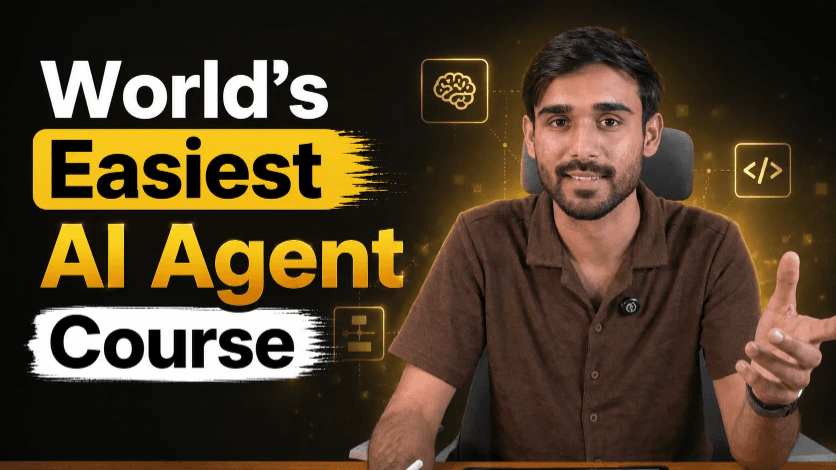
That is the idea behind Zero To AI's World's Easiest AI Course. On 1 November 2026 the course page lists it at ₹1,499, self-paced, 4 hours across 45 lessons, with lifetime access. Each course ends with a real build, according to its page. The page does not state a certificate or the language of instruction, so check those details before buying. If you are weighing it against other options, free vs paid AI courses in India lays out the trade-offs, and cheapest AI courses in India compares costs.
A 10-minute checklist before you buy
- Open the course page and search it for the words "Python", "programming", "math" and "prerequisite".
- Note the hours and multiply by two for realistic time.
- Find the certificate line. Is it free, paid or unclear?
- Check the language of instruction, not only the subtitles.
- Go to the checkout screen to see the price in ₹ and any renewal terms.
- Look for a refund or cancellation policy before entering card details.
- Write down what you want to be able to do in 30 days. If the course page does not promise that, keep looking.
Sources
- Google AI Essentials on Coursera
- AI For Everyone on Coursera (DeepLearning.AI)
- Introduction to Artificial Intelligence, Great Learning
- Elements of AI
- Microsoft Learn: Get started with AI applications and agents on Azure
- IIT Madras: SWAYAM Plus launches AI for All courses in Hindi (22 January 2026)
- Zero To AI course page
Last verified: 1 November 2026. Prices, hours and certificate terms change; confirm on the provider's page.
Learn to build AI workflows that handle your busywork — live sessions, real projects, zero code.
See the courseBeginner-friendly