.jpg&w=1080&q=75)
Autonomous AI Agents: What they're and How to Build One Without Code

Autonomous AI Agents: What They Are and How to Build One Without Code
What if you could set up an AI agent on Sunday evening and come back Monday morning to find it has already researched your competitors, drafted your weekly report, and flagged three urgent emails — without you touching it once?
This is the promise ofautonomous AI agents. And in 2026, it is not a distant dream. It is already happening in thousands of businesses around the world — including small teams and solo creators right here in India.
In this guide, you will learn exactly what autonomous AI agents are, how they actually work, what fully autonomous really means (spoiler: it is more nuanced than the hype suggests), and — most importantly — how you can build one this weekend without writing a single line of code.
What Are Autonomous AI Agents?
Anautonomous AI agentis an AI system that can execute multi-step tasks independently, making decisions and taking actions without requiring human input at each step.
The key word isindependently. Traditional AI tools wait for you to type a prompt and then respond. An autonomous agent, by contrast, receives a goal — and then figures out the steps, takes actions, evaluates results, and keeps going until the job is done.
Think of it like the difference between hiring a peon who asks you for permission before every single step, versus hiring a capable assistant who you brief once and who then handles the rest.
The defining characteristic of autonomous AI agents is that they operate in a continuous loop:
Perceive → Decide → Act → Evaluate → Repeat
Each cycle, the agent takes in new information, decides what to do next, executes an action (searching the web, writing content, calling an API, sending an email), checks whether it moved closer to the goal, and then decides the next step. This loop continues until the goal is achieved — or until the agent hits a dead end and asks for help.
This self-directed AI behaviour is what separates an agent from a simple chatbot.
Autonomous vs. Semi-Autonomous AI Agents
Here is where honesty matters. A lot of tools marketed as autonomous are actuallysemi-autonomous— and that distinction is important if you want to set realistic expectations.
Fully autonomous agentsoperate without any human involvement once they are set up. They are best suited for narrow, well-defined tasks with low stakes — such as sending a weekly digest email or posting a scheduled social media update.
Semi-autonomous agentshandle most of the work on their own but pause to ask for human confirmation before taking high-stakes actions — such as sending a proposal to a client or deleting files. Most enterprise-grade autonomous AI systems today fall into this category.
Neither approach is wrong. They just serve different purposes.
| Feature | Fully Autonomous | Semi-Autonomous |
|Human oversight required| None once live | Yes, at key decision points |
|Best for| Repetitive, low-stakes tasks | Complex, high-stakes workflows |
|Scope| Narrow and well-defined | Broader, more flexible |
|Risk level| Low (if scoped correctly) | Managed through checkpoints |
|Examples| Scheduled social posts, digests | Client outreach, legal drafting |
|Error cost| Low | High without checkpoints |
The honest truth:if you are building your first autonomous agent, start with the fully autonomous approach applied to low-stakes tasks.You get the set it and forget it experience with minimal risk.
Real Examples of Autonomous AI Agents in 2026
Autonomous AI agents are not theoretical. Here are five real examples running right now:
1. AutoGPT-Style Research Agents
These agents receive a research question — say, Who are the top 5 competitors of my SaaS product in India? — and autonomously browse the web, read pages, synthesise findings, and produce a structured report. No human clicks required in between. Tools like AutoGPT, AgentGPT, and similar open-source frameworks have made this accessible even to non-technical users.
2. Zapier Zaps with AI Steps
Zapiers AI-powered Zaps are arguably the most widely used autonomous agents in the world. A trigger fires (a new form submission, a new email, a scheduled time) and the Zap executes a chain of actions — including AI reasoning steps — without any human involvement. Thousands of Indian freelancers and small businesses already use these to automate client onboarding, invoice reminders, and lead qualification.
3. GitHub Copilot Agents
GitHub Copilots agent mode can autonomously review pull requests, flag potential bugs, suggest code fixes, and even write tests — all triggered automatically when a PR is opened. Developers wake up to a reviewed PR with actionable suggestions, generated entirely without supervision.
4. Customer Support Agents
Platforms like Intercom, Freshdesk, and Zoho have AI agents that handle Tier 1 support tickets end-to-end — reading the ticket, looking up the knowledge base, drafting a response, and sending it. A human only gets involved when the agent flags that it cannot resolve the issue.
5. Social Media Scheduling Agents
Tools like Buffer, Publer, and custom n8n workflows can act as fully autonomous social media managers — generating captions using AI based on a content calendar, selecting images, and posting on schedule. Once set up, they run for weeks without any intervention.
How Autonomous AI Agents Actually Work (The Loop)
Under the hood, most modern autonomous agents use what researchers call theReAct loop— short for Reasoning + Acting. Here is how it works, step by step:
Starting from the goal, the agent moves through these stages:
- PLAN: Break the goal into sub-tasks
- ACT: Execute the first action (search, write, call API, read file)
- OBSERVE: Review the result of the action
- REASON: Did that move us closer to the goal? What should we do next?
- DECIDE: Choose the next action
- REPEAT until goal is achieved
A concrete example:You give an agent the goal — Find the 3 most-read blog posts on AI automation from the past month and summarise them in 200 words each.
- Step 1: The agent plans — I need to search for popular AI automation content, filter by recency, and then summarise.
- Step 2: It searches the web for AI automation blog posts 2026.
- Step 3: It reads the results and evaluates which posts have high engagement signals.
- Step 4: It reasons — I have three candidates. Now I need to summarise each.
- Step 5: It generates the summaries, one by one.
- Step 6: It compiles everything into a final output and delivers it.
The whole process runs without you watching it. That is an automated AI agent in action.
What makes this powerful — and also why it requires some guardrails — is that the agent is making real decisions at each step. It is not just following a script. It is reasoning. And reasoning, like any human judgment, can sometimes go in the wrong direction.
How to Build a Mostly Autonomous AI Agent Without Code
Ready to build your first one? Here is a step-by-step guide usingZapier + Claude— both of which have free tiers sufficient to get started.
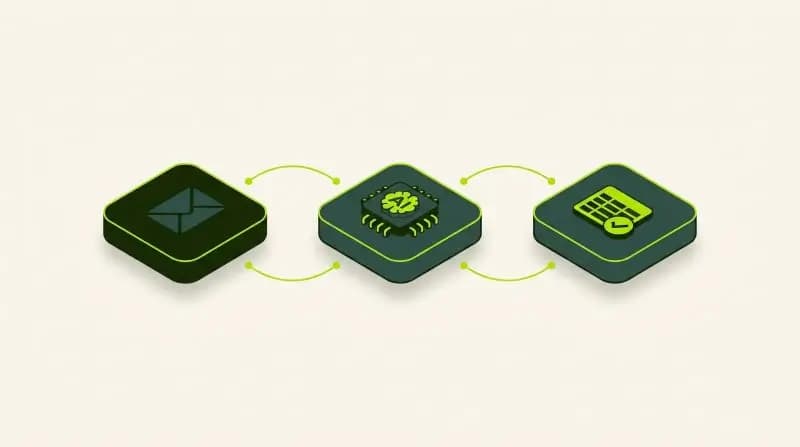
This example builds an agent that monitors your Gmail for new leads, researches the sender, drafts a personalised reply, and sends it to you for approval (semi-autonomous) or sends it directly (fully autonomous — your choice).
Step 1: Define the Trigger
Log into Zapier and create a new Zap. Choose your trigger:
- Time-based trigger: Every Monday at 8 AM — great for weekly digest agents.
- Event-based trigger: New email in Gmail or New row in Google Sheets — great for reactive agents.
For our example, select Gmail → New Email Matching Search and set the filter to emails with the label lead or from a specific domain.
The trigger is the heartbeat of your autonomous agent. Without a good trigger, nothing runs.
Step 2: Set Up the AI Reasoning Step
Add a new action step: Claude by Anthropic (or use Zapiers built-in AI step). Write a prompt that tells the AI what to do with the trigger data. For example:
You are a professional sales assistant for an Indian ed-tech company. A new lead has arrived with the following details: Name: [sender_name], Email: [sender_email], Message: [email_body]. Your task: 1. Identify the leads likely role and interest based on their message. 2. Draft a warm, personalised reply (under 150 words) that acknowledges their query and invites them to book a free discovery call. 3. Keep the tone friendly and professional. Output only the email reply — no subject line, no extra commentary.
This is where the AI reasoning happens. The agent is not just copy-pasting — it is reading, understanding, and drafting intelligently based on context.
Step 3: Add Action Steps
Now add the downstream actions — what happens after the AI thinks:
- Send Email via Gmail: Send the drafted reply directly to the lead (fully autonomous mode).
- OR: Send to Slack: Post the draft to your Slack channel for review before sending (semi-autonomous mode — recommended for beginners).
- Log to Google Sheets: Add a row with the leads details and the draft reply for your records.
Chain these action steps in sequence. Zapier runs them automatically, in order, every time the trigger fires.
Step 4: Test and Set Live
Use Zapiers test function to run the Zap with a real or sample email. Review the output at each step. If the AI draft looks good, clickTurn on Zap.
From this point forward, the agent runs on its own. Every new email matching your criteria gets processed, reasoned about by Claude, and either sent or queued for your review — automatically, without you touching it.
That is a working autonomous AI agent. No code written. Built in under an hour.
What Are the Risks? (And How to Stay in Control)
Autonomous agents are powerful. They are also imperfect. Here is an honest breakdown of the risks and how to manage them:
1. AI can misinterpret context.
An agent that drafts and sends emails autonomously might occasionally generate a reply that misses the tone or misreads the intent of the original message. Always review the first 10 runs of any new autonomous workflow before letting it run fully unsupervised.
2. Triggers can fire unexpectedly.
A Zap that triggers on all new emails might fire on spam, newsletters, or internal messages you did not intend. Be specific with your trigger filters from the start.
3. Compounding errors.
In a multi-step agent, a mistake in Step 2 can cascade through Steps 3, 4, and 5. Use Zapiers filter steps to add conditional logic — only continue if the AI output contains X.
4. Over-autonomy for high-stakes tasks.
Do not build a fully autonomous agent for tasks like sending client proposals, making purchases, or deleting data. These need a human checkpoint.
The golden rule:Start with low-stakes, reversible tasks. Automate your way up as you build confidence in the agents reliability. AI without supervision works best when the cost of an occasional mistake is low.
Conclusion
Autonomous AI agents are not science fiction — they are running in thousands of businesses right now. And the barrier to entry has never been lower. You do not need a developer. You do not need a budget. You need a clear goal, a reliable trigger, and a well-crafted AI reasoning step.
Start small. Build an agent that handles one repetitive task. Watch it run for a week. Then layer on the next one.
Zero To AIs course includes a dedicated module on building your first autonomous agent workflow — guided, no-code, and live in under an hour.You will build a real working agent, not just watch theory. If you are serious about making AI work for you without constant supervision, this is where you start at zerotoai.in
Learn to build AI workflows that handle your busywork — live sessions, real projects, zero code.
See the courseBeginner-friendly