.jpg&w=1080&q=75)
How to Turn Your Business SOPs Into Self-Correcting Autonomous Agents

How to Turn Your Business SOPs Into Self-Correcting Autonomous Agents
Every mature business runs on SOPs (Standard Operating Procedures). We write PDF manuals detailing exactly how to onboard a customer, how to verify an invoice, or how to handle a shipping delay. We hire operations teams, train them on these manuals, and hope they follow the steps without error.
But in 2026, static PDFs are becoming obsolete.
Instead of writing instructions for humans to execute manually, forward-thinking operations teams are translating their SOPs into autonomous business agents.
At zerotoai, we teach organizations how to turn static procedures into active, self-correcting software loops. This article walks you through the step-by-step process of converting your SOPs into digital workers.
The Gap: Why Written SOPs Fall Short
Written SOPs have three inherent failures:
1. Friction of Access: Employees rarely read the manual. When a crisis hits, they guess or ask a colleague, leading to inconsistent operations.
2. Zero Automation: A PDF cannot click a button. A human must read the instruction, open the CRM, look up the client, and type the update.
3. Human Errors in Repetition: Repeating a 10-step process 50 times a day leads to fatigue, resulting in missed fields and database typos.
By turning these steps into an agent, the system handles the execution, leaving the human to handle edge cases.
How to Translate an SOP into an Agentic Schema
To convert a written procedure into an autonomous business agent, you must translate natural language instructions into a structured state machine.
Step 1: Define the Input and Output Schemas
Specify the exact data parameters required to start the task and what the final output must look like.
• SOP instruction: "Check the client's account in Stripe."
• Agent Translation: Define a Pydantic class: StripeAccount(client_id: str, plan_status: str, balance: float).
Step 2: Map the Decision Nodes
Convert paragraph instructions into logical branches.
• SOP instruction: "If the client's balance is negative, notify account management. Otherwise, proceed with onboarding."
• Agent Translation: A conditional edge in a state graph (e.g., in LangGraph):
    def check_balance(state):
        if state.stripe_balance < 0:
            return "notify_manager"
        return "proceed_onboarding"
Step 3: Implement the Self-Correcting Loop (Harness)
When a human runs into a network error, they refresh the page. Your agent needs the same capability built into its harness.
If the agent tries to write to the database and encounters a validation error, the harness must catch the error, write a log, and trigger a retry node with adjusted parameters.
Case Study: Automating Invoice Fraud Detection
Here is a practical example of how a Zero To AI client turned a manual finance SOP into an agentic workflow:
• The Old Way: Every morning, an operations associate logged into the billing email, downloaded invoice PDFs, opened the accounting system, cross-referenced the line items with the purchase order, checked the vendor's bank details, and clicked approve.
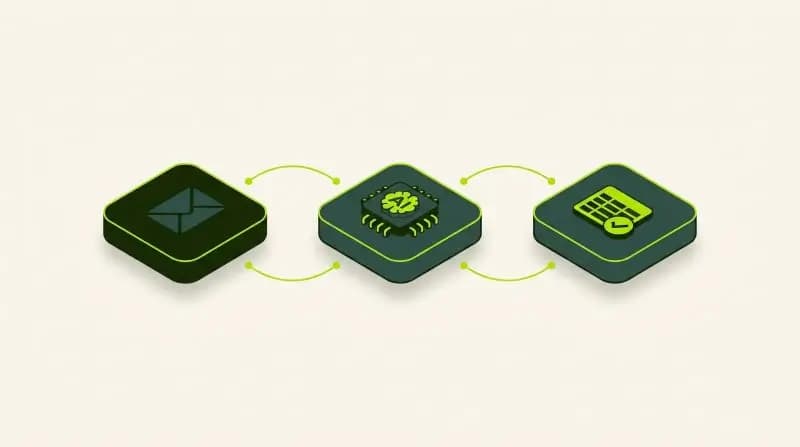
• The Agentic Way: We set up an n8n workflow that listens to the billing inbox.
1. An extraction agent parses the invoice PDF into a structured schema.
2. A validation agent calls the internal API to check the purchase order.
3. A security agent performs a pattern match on the vendor's bank details.
4. If everything matches, the agent writes to the accounting system and queues a Slack notification for the CFO: [Approve Invoice #1234 - $4,200].
5. One click completes the payment.
The company went from spending 2 hours a day on invoicing to 2 minutes of clicking approve in Slack.
Conclusion: Code is the New Process Manual
In 2026, the value of an operations lead isn't just writing the best procedures; it's knowing how to encode those procedures into software.
When you turn your SOPs into autonomous business agents, your processes become self-executing, self-correcting, and infinitely scalable.
Ready to turn your operations manuals into active digital workers?
[Join our Zero To AI Enterprise Program] and collaborate with our architects to deploy custom agent systems in your business.
Learn to build AI workflows that handle your busywork — live sessions, real projects, zero code.
See the courseBeginner-friendly