.jpg&w=1080&q=75)
The MCP Revolution: Why Model Context Protocol is the New API Standard for AI Agents

The MCP Revolution: Why Model Context Protocol is the New API Standard for AI Agents
Every decade or so, a new communication standard quietly rewires an entire industry. REST APIs did it for the web in the 2010s. In 2026,Model Context Protocol (MCP)is doing it for AI agents — and most founders are still sleeping on it.
If youve ever wondered why your AI agent can chat brilliantly in a sandbox but falls apart the moment it tries tod'osomething real — search the web, read a file, post to Slack — the answer is almost always a broken tool integration. MCP was built to fix that permanently.
What Is Model Context Protocol (and Why Should You Care)?
MCP is an open standard, pioneered by Anthropic and now adopted across the AI ecosystem, that defineshowAI models communicate with external tools, data sources, and services in a structured, reliable way.
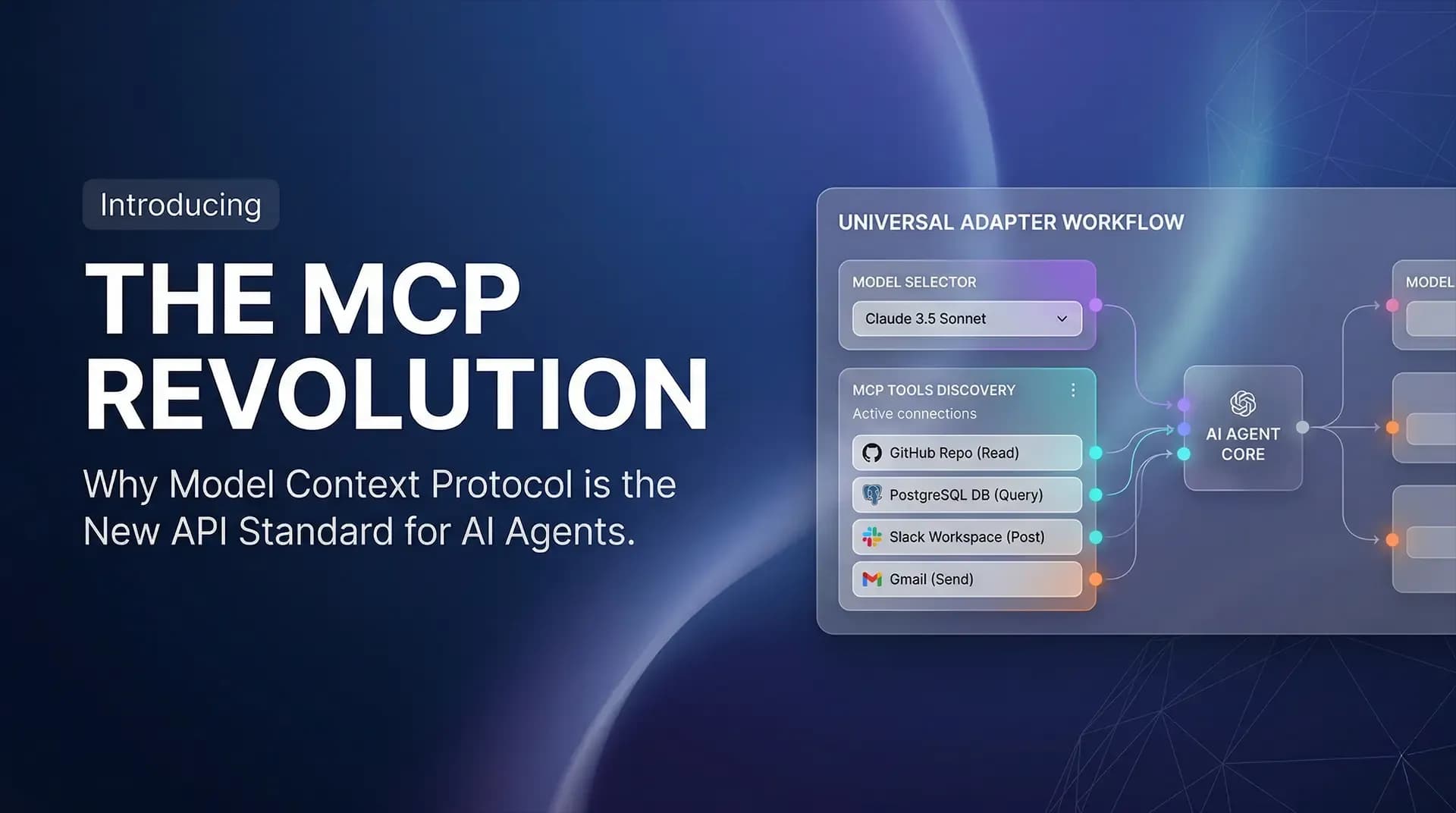
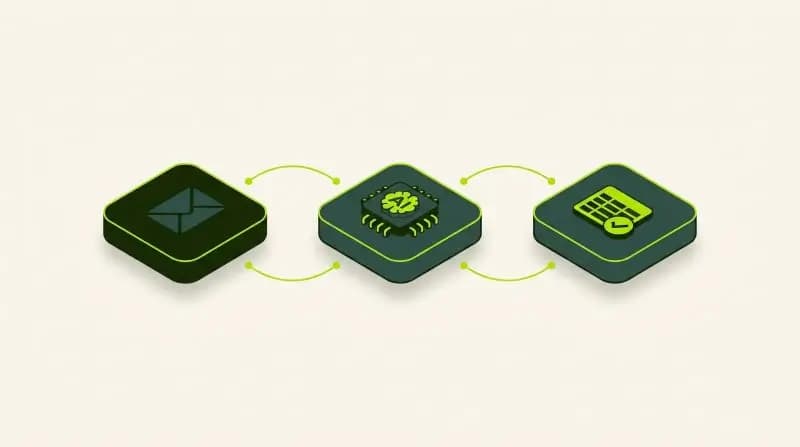
Think of it as a universal adapter. Before MCP, every AI tool integration was a custom-built, brittle bridge: one broken API call and your entire agent workflow collapsed. With MCP, tools expose a standardized interface that any compliant AI model can discover, understand, and call — without bespoke code for every connection.
In technical terms, MCP operates overJSON-RPC, allowing agents to:
- L'istavailable tools and their schemas
- C'allthose tools with structured arguments
- Receivestructured, typed responses
- Handleerrors gracefully without derailing the workflow
The result? An agent that can switch from searching the web to reading a database to sending an email — all within a single, coherent workflow — without any of those integrations needing to know about each other.
Why MCP is Winning Against Traditional API Approaches
Traditional REST APIs are powerful but brittle for agentic use. Heres the core problem: when a human developer calls an API, theyve already read the documentation, understood the schema, and written the integration code. An AI agent has to do all three of those thingsat runtime, with no guarantees about schema consistency or error format.
MCP solves this by treating tools asfirst-class, self-describing resources:
- Discovery: Agents call
tools/listto get a full manifest of whats available — no documentation required. - Schema Enforcement: Every tool call includes a JSON schema for inputs and outputs, giving the model a clear contract to reason against.
- Stateful Sessions: Unlike stateless REST calls, MCP supports persistent sessions, allowing agents to maintain context across multiple tool interactions.
The difference in production reliability is stark. Teams using MCP-native agent frameworks report60% fewer integration failurescompared to ad-hoc API orchestration, according to early 2026 enterprise pilots.
The Ecosystem: Whos Building on MCP?
The adoption curve for MCP has been remarkable. In less than 18 months from its initial Anthropic release, MCP has become the de facto standard for tool-use in agentic AI:
- Anthropic: Claude models natively support MCP as the primary tool-use interface, with hundreds of official and community MCP servers available.
- OpenAI: While maintaining function-calling, OpenAI has begun aligning its tool-use specifications with MCP conventions for interoperability.
- Enterprise Platforms: Salesforces updated Slackbot, Microsoft Copilots multi-model workflows, and SAPs Business Data Cloud are all leveraging MCP-compatible tool interfaces.
- Open-Source Community: Thousands of community-built MCP servers now exist for everything from Google Calendar to GitHub to PostgreSQL databases — all plug-and-play with any compliant agent.
Zero To AI Insight:The most valuable engineers in 2026 arent the ones who know how touseAI tools — theyre the ones who know how tobuildMCP servers that expose business logic to AI agents. Thats where the leverage is.
How to Build an MCP-Ready AI Stack
You dont need to be a backend engineer to start thinking in MCP. Heres the practical playbook:
- Audit Your Existing Tools: List every service your business uses (CRM, databases, communication tools, analytics). Each one is a candidate for an MCP server.
- Choose a Framework: Use established MCP server frameworks (LangChain, Claude SDK, or community MCP boilerplates) to expose your tools with minimal code.
- Connect to an Orchestrator: Pair your MCP tools with an agent framework (Claude, GPT, or open-weight models via Ollama) that can discover and call tools at runtime.
- Test for Resilience: MCPs error handling is a feature, not an afterthought. Test what happens when tools fail — your agent should gracefully recover, not crash.
- Monitor Like Production: Treat agent tool calls like microservice calls. Log inputs, outputs, latency, and error rates. This data is gold for optimizing your agentic workflows.
The Strategic Implication: MCP is an Infrastructure Moat
Heres the insight that most competitors miss: an MCP-rich internal library is a compounding advantage. Every time your team builds a new MCP server — for your proprietary data, your internal APIs, your industry-specific workflows — youre adding another tool thatno external AI model or competitor can access.
Your AI agents become progressively more capable, not because you switched to a bigger model, but because you gave them better tools.
In the race to build the most capable AI company, the moat isnt the model. Its the toolbox.
Conclusion: The Infrastructure Layer That Will Define the Next Era
MCP isnt just a technical standard — its the connective tissue of the agentic economy. As AI agents move from demos to digital coworkers, the companies that have invested in a robust, MCP-native tool infrastructure will be the ones that scale fastest, fail least, and compound most.
Dont wait for the perfect agent. Build the perfect toolbox.
Learn to build AI workflows that handle your busywork — live sessions, real projects, zero code.
See the courseBeginner-friendly