.jpg&w=1080&q=75)
Meet MCP: The Model Context Protocol for AI Agents

Meet MCP: The Model Context Protocol for AI Agents
If you've tried building custom AI agents, you know the integration nightmare. To let an agent read Slack, you write a custom API wrapper. To query your database, you write a database connector. The Model Context Protocol (MCP) changes everything. Think of it as the "USB-C of the AI world." Instead of writing a different connector for every device, database, or API, MCP provides a single, open standard that allows any AI agent to connect to any data source instantly.
The AI industry was fast becoming a tangled mess of custom APIs and ad-hoc scripts, but MCP provides a unified path forward.
Here is why MCP is the most important development in AI integration and how it works.
What is the Model Context Protocol?
The Model Context Protocol (MCP) is an open-source standard initiated by Anthropic that defines how an AI model (like Claude or GPT) interacts with external data sources and tools.
Before MCP, integration was a one-to-one problem:
• Agent A needs Database X → Write Connector AX
• Agent B needs Database X → Write Connector BX
• Agent A needs Slack → Write Connector AS
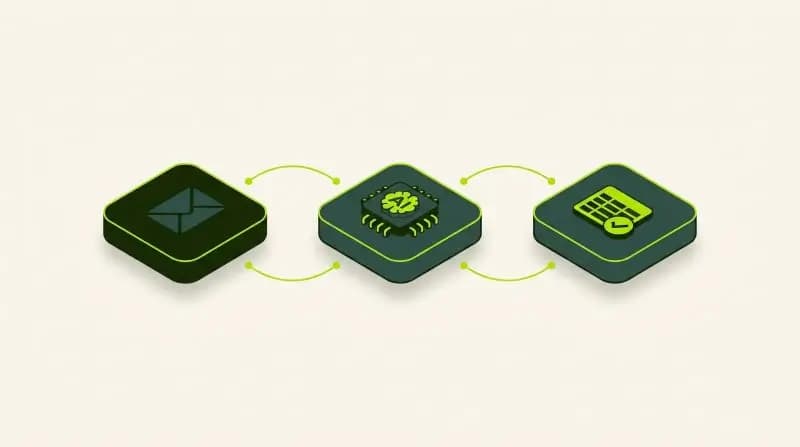
With the MCP standard, the architecture changes to a hub-and-spoke model. The client (your AI agent) talks to an MCP server (the data source wrapper) using a unified protocol. As long as the data source has an MCP server, any MCP-compliant AI agent can read, write, and interact with it immediately.
How MCP Works: Clients, Servers, and Hosts
To understand the Model Context Protocol, it helps to understand its three core roles:
1. The Host: The application that runs the AI and coordinates the workflow (e.g., Cursor, Claude Desktop, or your custom Python agent loop).
2. The Client: The component inside the host that negotiates the connection and passes context to the LLM.
3. The Server: The lightweight service that exposes specific resources (like files, databases, or APIs) and tools to the client.
When you install an MCP server (for example, a GitHub MCP server), your AI agent doesn't need to know the GitHub API endpoints. It simply asks the MCP client: "What tools are available?" The client queries the GitHub MCP server, which returns a list of standardized tools (e.g., create_issue, list_pull_requests). The agent selects the tool, the client executes it, and the data is fed back to the agent as context.
Why MCP is a Game-Changer for AI Agent Integration
For developers and business owners, the adoption of MCP solves three massive problems:
1. Zero-Effort Data Sharing
If you want your local AI agent to query your company's PostgreSQL database, you no longer need to write a custom query engine. You simply spin up the official PostgreSQL MCP server. The agent can now securely read schemas and run queries natively.
2. Provider Independence
Because MCP is open-source and model-agnostic, you aren't locked into a single AI provider. If you build an MCP-based workflow for Claude, you can switch the backend model to Llama 3 or GPT-5.4 without changing a single line of your integration code.
3. Granular Security
MCP servers act as gatekeepers. Instead of giving an LLM full access to your system, the MCP server defines exactly what files, directories, or API actions are exposed. You retain full control over what the AI can see and do.
Conclusion / CTA
The Model Context Protocol is quietly shifting the AI landscape from fragmented experiments to a unified, plug-and-play ecosystem. By standardizing how agents interact with the world, MCP is making it easier than ever to build powerful, secure, and vendor-neutral AI assistants.
At zerotoai, we are building all our agentic templates using MCP. Ready to start? Check out our tutorial on building secure local AI agents or subscribe to our newsletter for weekly guides on building state-of-the-art AI systems that "just work."
Learn to build AI workflows that handle your busywork — live sessions, real projects, zero code.
See the courseBeginner-friendly