.jpg&w=1080&q=75)
Why Chatbots Are Dead: How "Systems of Action" Are Replacing Passive AI


Why Chatbots Are Dead: How "Systems of Action" Are Replacing Passive AI
For the last three years, the corporate world has been obsessed with chatbots. We built custom GPTs, optimized prompt templates, and forced employees to copy-paste data into text boxes. We celebrated when the AI returned a neat summary or drafted a response.
But in 2026, the novelty of "chatting" has worn off. Copying and pasting text between five different tabs isn't automation—it's just a digital chore with a smarter assistant.
Passive AI is dying. The future belongs to Systems of Action AI.
At zerotoai, we teach the core difference between asking AI for answers and delegating entire workflows to autonomous digital workers. This guide breaks down why chatbots are losing their value and how Systems of Action are restructuring business operations in 2026.
The Core Deficit: Why Passive Chatbots Fall Short
A chatbot is a reactive system. It sits on a web page or in a Slack channel, waiting for a human to type a prompt.
The limitations of the chatbot model:
• Context Fragmentation: Chatbots don't know what happened five minutes ago in your email, CRM, or database unless you copy-paste it.
• Attention Tax: Humans must review, verify, and manually execute every recommendation the chatbot makes. This creates a cognitive bottleneck.
• Zero Autonomy: If you don't ask, the chatbot does nothing. It cannot monitor a system, notice an anomaly, and fix it while you sleep.
In short, chatbots are Systems of Record with a conversational wrapper. They store or retrieve knowledge, but they cannot act.
What is a "System of Action"?
A System of Action is an agentic AI system designed to achieve a high-level goal by autonomously executing a sequence of steps. Instead of asking you what to do next, it plans, interacts with APIs, manages state, handles errors, and only alerts you when it reaches a predetermined "Human-in-the-Loop" approval gate.
Passive Chatbot:
User prompt -> AI reply -> User copy-pastes -> User clicks button

System of Action:
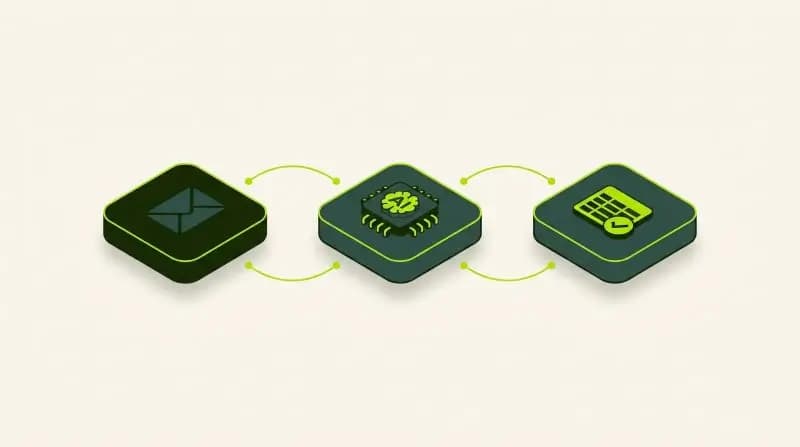
Event Trigger -> AI plans -> Executes API Call -> Validates output -> Human Approves -> Saves to database
Instead of asking, "How do I draft a refund email?" you tell the System of Action: "Process all pending refunds under $50, verify their purchase history in Stripe, draft the email, and queue it in HubSpot."
3 Pillars of Systems of Action in 2026
To transition your business from passive AI to active systems, you must build on three core pillars:
1. Unified State & Memory
Unlike a chatbot that starts fresh with every session, a System of Action maintains a persistent state. It knows where it is in a multi-day workflow, remembers previous user preferences, and saves execution logs to a database.
2. Native Tool Execution
Systems of Action are equipped with secure API integrations. They don't just explain how to update a lead in Salesforce; they call the Salesforce API, check for duplicate records, and write the data directly.
3. Self-Correcting Logic
When an API returns an error or a website changes its layout, a chatbot simply prints a failure message. A System of Action uses reasoning loops to analyze the error, adjust its parameters, and retry the execution.
How to Build Your First System of Action
At the Zero To AI University, we guide students through replacing their manual tasks with n8n or LangGraph orchestration. Here is the blueprint we recommend for beginners:
1. Map the Friction: Identify a repeated task that takes more than 3 steps and involves moving data between systems.
2. Define the Triggers: Set up a webhook or cron job to start the workflow automatically (e.g., "every Friday at 9 AM" or "when a new lead form is submitted").
3. Establish the Guardrails: Force the AI to output structured data (using tools like Pydantic) so that the downstream APIs do not break.
4. Insert the Human Gate: Create a Slack notification or email approve/reject button. The agent stops and waits for your confirmation before finalizing any financial or public-facing action.
Conclusion: Stop Chatting, Start Orchestrating
In 2026, the competitive advantage isn't knowing how to write the perfect prompt. The advantage goes to the founder or operator who can architect systems of action that run in the background.
When you treat AI as an autonomous digital employee rather than a search box, you free up your team to focus on strategy, taste, and relationships.
Ready to transition from prompts to systems?
[Join our Zero To AI Workflow Accelerator] and get the exact templates we use to build self-correcting agentic systems.
Learn to build AI workflows that handle your busywork — live sessions, real projects, zero code.
See the courseBeginner-friendly