.jpg&w=1080&q=75)
Agentic AI Explained: How It Differs From Chatbots and Why It Matters for Indian Businesses

Primary Function | Generates text answers and message drafts | Executes single pre-configured actions | Formulates plans and executes multi-step goals |
Level of Autonomy | Zero; requires direct prompts for each reply | Low; follows linear if-then rules | High; decides next steps dynamically to reach a goal |
Software Tool Access | None; confined to browser chat window | Interacts with one or two specific APIs | Interacts with WhatsApp, spreadsheets, databases, and portals |
Error Handling | Fails silently or invents incorrect answers | Stops workflow immediately on error | Analyzes failure reasons, adjusts parameters, and retries |
Business Role | Brainstorming assistant or reference guide | Basic helper handling routine triggers | Operational worker managing complete workflows |
Setup Complexity | Instant; sign up and begin typing | Moderate; requires basic webhook setup | Visual drag-and-drop canvases in Make or n8n |
Monthly Operating Cost | Free to ₹1,650 (standard subscription) | ₹1,500 to ₹3,000 on automation platforms | ₹1,200 to ₹4,000 based on usage tokens |
Practical Indian Use Case | Writing product descriptions for an online store | Sending an email alert when a contact form is filled | Reconciling monthly GST returns across 150 supplier bills |
Real Indian Case Study 1: Bengaluru CA Firm Automates GST Reconciliation
Rajesh Kulkarni runs a Chartered Accountancy firm in Koramangala, Bengaluru, managing tax compliance for 180 local retailers, tech startups, and manufacturing units.
The Operational Bottleneck
Every month between the 11th and 20th, Rajesh and four junior clerks faced intense operational pressure. Clients submitted hundreds of purchase bills through WhatsApp photos, email attachments, and paper receipts.
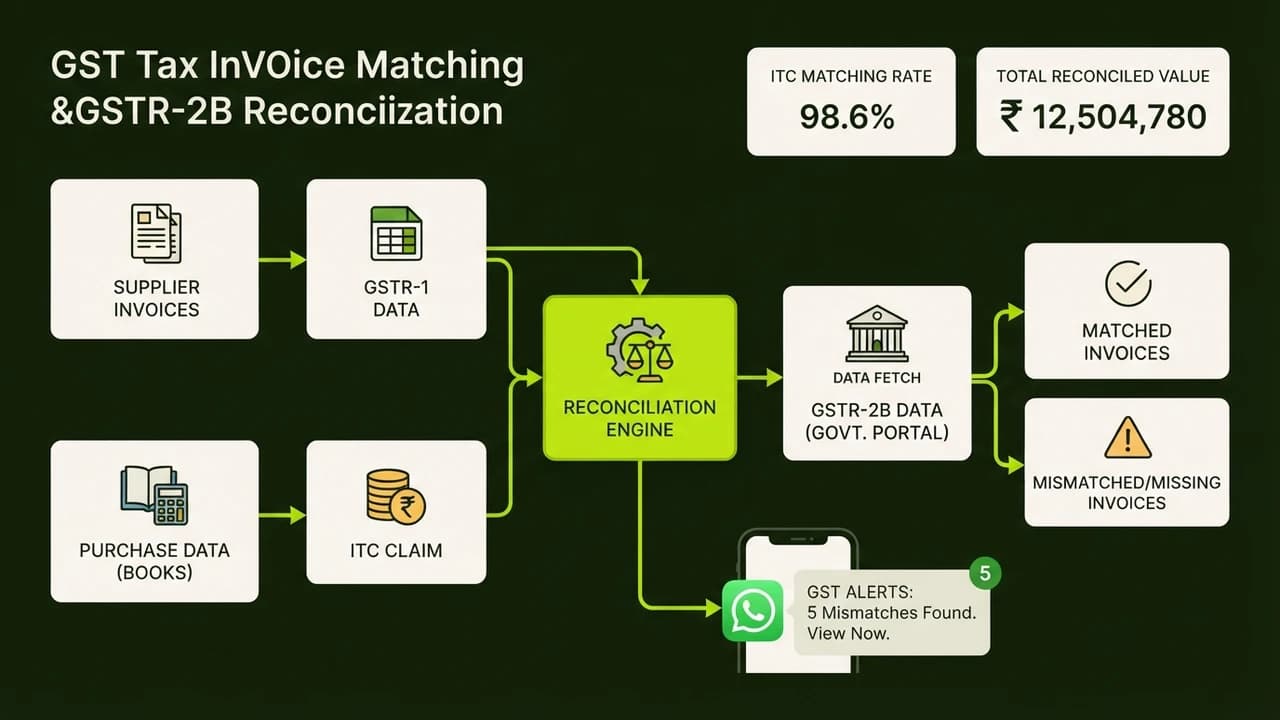
To file monthly GSTR-3B returns, clerks manually cross-verified every bill against the government GSTR-2B portal report. This consumed 120 staff hours monthly, while missed GSTIN mismatches and tax rate errors led to penalty notices.
The Agentic Solution
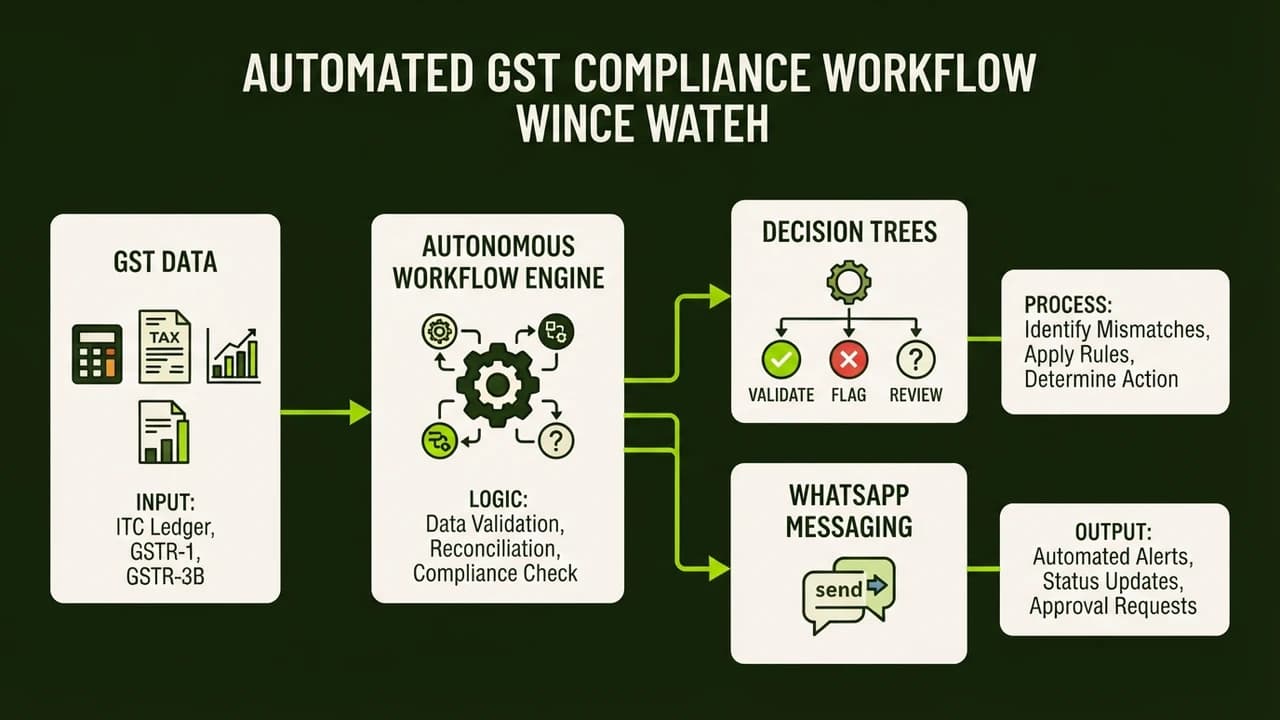
Rajesh implemented a no-code agentic workflow using Make.com, Claude 3.5 Sonnet API, and Google Drive:
- Document Ingestion: Clients upload bills via a dedicated WhatsApp Business number or a shared Google Drive folder.
- Autonomous Parsing: The agent extracts vendor names, GSTINs, invoice dates, taxable amounts, CGST, SGST, and IGST figures from PDFs or clear mobile photos.
- Registry Verification: The agent checks each vendor GSTIN against the official GST portal database to verify active status.
- Cross-Reconciliation: The agent compares parsed data against the client's monthly GSTR-2B record. Matching entries are marked verified in the firm's master ledger.
- Exception Handling: If a tax amount differs by even ₹5, or if an invoice is missing from GSTR-2B, the agent flags the entry, drafts an inquiry note to the vendor, and queues it for review.
Measurable Results
- Time Saved: Monthly reconciliation time dropped from 120 hours to under 15 hours.
- Accuracy Rate: Error rate declined from 6.8 percent to 0.2 percent across 2,400 monthly invoices.
- Monthly Cost: Rajesh spends approximately ₹2,100 monthly on Make.com plans and API credits.
- Annual Savings: By avoiding two new clerk hires while expanding his client roster by 35 percent, Rajesh saved over ₹6 Lakh annually in operating expenses.
Real Indian Case Study 2: Mumbai Coaching Institute Scales Student Admissions
Sunita Deshmukh runs Apex Commerce Academy in Dadar, Mumbai, providing coaching for Class 11, Class 12, and CA Foundation entrance examinations.
The Operational Bottleneck
During the peak admission season from May to August, the academy receives 40 to 60 student inquiries daily via Instagram ads and Google searches.
Sunita initially deployed a basic WhatsApp chatbot with static buttons. The bot failed because parents asked detailed questions on batch timings, installment fees, and scholarship criteria. The bot simply replied: "Visit our office between 10 AM and 6 PM." Parents abandoned conversations, costing Sunita roughly 30 percent of potential admissions due to delayed evening replies.
The Agentic Solution
Sunita built an autonomous admission agent using n8n and GPT-4o connected to her WhatsApp Business number:
- Conversational Discovery: The agent chats naturally in conversational Hinglish or English, asking about the student's current grade, target exam, and preferred timing.
- Live Schedule Verification: The agent checks a Google Sheet for batch capacities. If the morning batch is full, it suggests an afternoon slot taught by the same faculty member.
- Personalized Brochure Delivery: The agent dynamically generates and shares a PDF brochure reflecting the student's chosen subjects and fee payment options.
- Demo Class Scheduling: The agent books a complimentary two-day demo seat on Google Calendar and sends a Google Maps pin for the Dadar center.
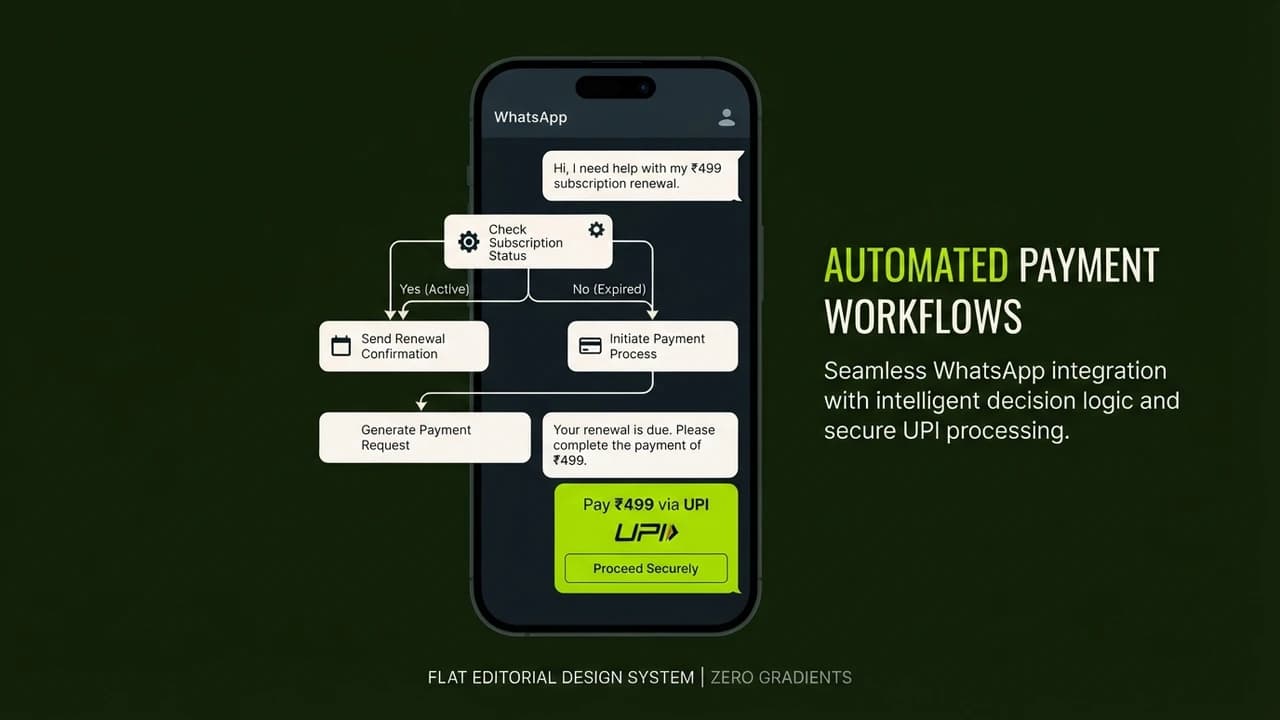
- Token Payment Collection: If the parent chooses to reserve a seat, the agent shares an instant ₹500 token registration link via Razorpay UPI and updates the student register upon payment confirmation.
Measurable Results
- Response Time: Inquiries receive instant replies in 18 seconds, 24 hours a day.
- Admission Conversion: Demo class attendance grew by 42 percent due to rapid engagement.
- Revenue Impact: Sunita enrolled 64 additional students, generating ₹14.8 Lakh in additional course fees.
- Operating Expense: The entire system runs on an n8n setup and API tokens costing under ₹1,800 monthly.
5 Common Mistakes Indian Businesses Make With AI Agents
To avoid wasted investments, Indian business owners should steer clear of these five frequent mistakes:
Mistake 1: Mistaking a Basic Chatbot for an Autonomous Agent
Many agencies sell custom AI agents that are simply standard ChatGPT wrappers with an uploaded PDF. If the system cannot trigger an API, update a spreadsheet, or complete an external task independently, it is a chatbot, not an agentic system.
Mistake 2: Granting Unrestricted Financial Authority
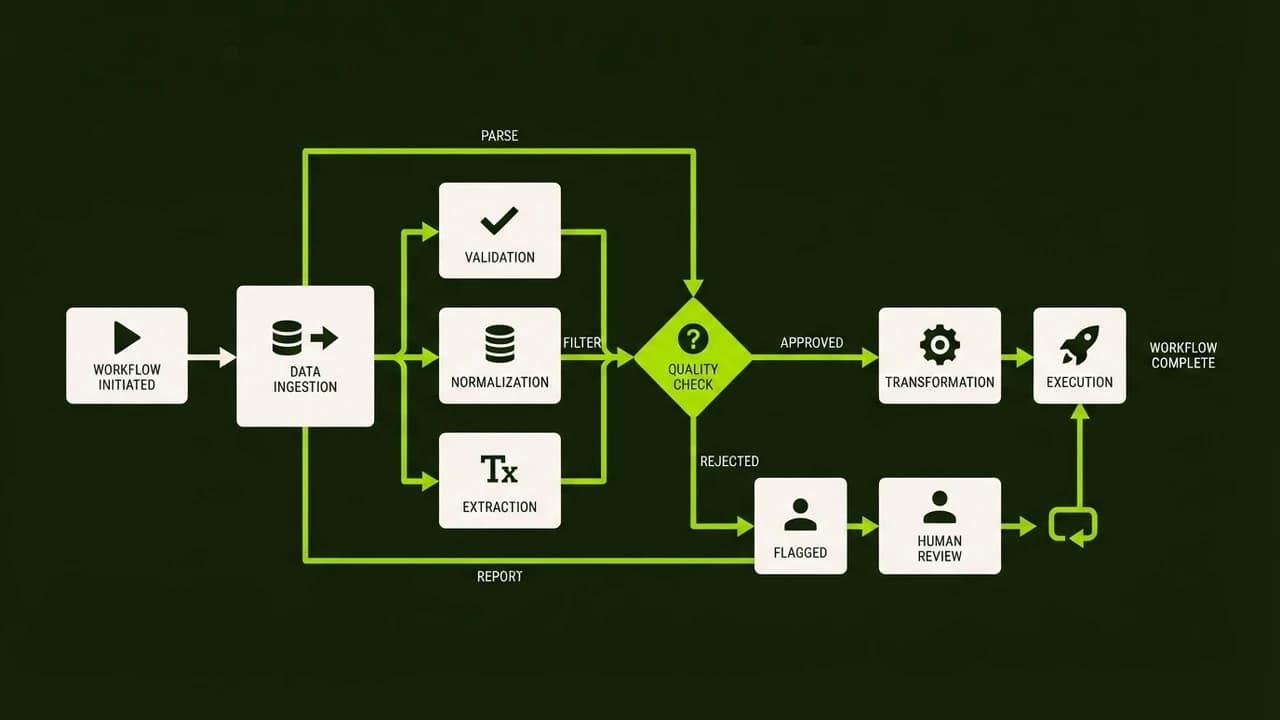
Never allow an AI agent to execute payments or issue customer refunds without human approval. Use a human-in-the-loop framework where the agent prepares the data and requests one-tap manager approval before funds move.
Mistake 3: Overlooking Local Communication Channels
Western software guides focus on Slack and Salesforce. In India, business runs on WhatsApp, UPI, Google Sheets, and Tally. An automation system that forces customers onto complex portals will struggle. Build workflows natively around WhatsApp and UPI.
Mistake 4: Building Overly Complicated Multi-Agent Swarms
Academic papers often praise multi-agent swarms where multiple bots debate one another. In practice, swarms increase token costs and introduce failure points. A single, focused agent with two or three clear tools performs far more reliably.
Mistake 5: Relying on Disorganized Business Data
An AI agent depends on accurate source data. If your price list has conflicting numbers or your inventory records are outdated, your agent will communicate incorrect details. Organize your data in clean Google Sheets before activating client-facing agents.
Build Your First AI Agent in Just 40 Minutes at Zero To AI
Understanding the theoretical difference between a chatbot and an autonomous agent is helpful, but deploying a working automation that saves your business 15 hours every week is where real leverage begins. You do not need a computer science degree, expensive software consultants, or months of coding bootcamps to automate your daily operational tasks.
At Zero To AI, we guide non-technical Indian professionals, business owners, and freelancers step by step through building practical, revenue-generating AI systems from scratch.
Build Your First AI Agent in Just 40 Minutes (No Code Required)
Learn to build AI workflows that handle your busywork — live sessions, real projects, zero code.
See the courseBeginner-friendly